
Section 8 Rent Estimator
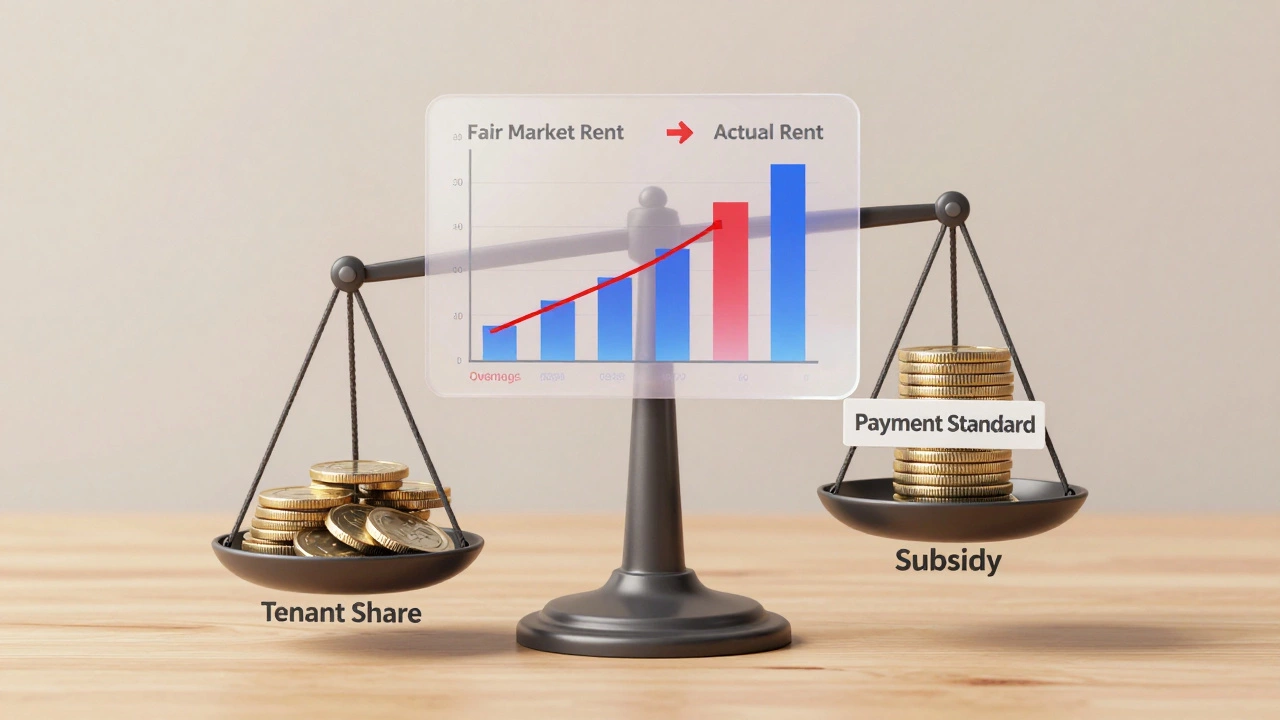
You typically pay 30% of your adjusted income. The Housing Authority pays the difference between your share and the Payment Standard. If rent exceeds the standard, you pay the extra.
Example from article:
Income: $2,000 | Standard: $1,200 | Rent: $1,400
Your Cost: $800 ($600 base + $200 overage)
Calculation Breakdown
You’ve been approved for a Section 8 Housing Choice Voucher is a federal program that helps low-income families afford safe and decent housing in the private rental market. It was established by the United States Department of Housing and Urban Development (HUD) to provide flexible housing assistance. Now you’re hunting for an apartment, but there’s a catch: your landlord might say, "I don’t take Section 8," or worse, "My rent is too high for your voucher." You need to know exactly what the most Section 8 will pay before you waste time touring homes you can’t afford. The answer isn’t a single number; it depends on where you live, the size of the unit, and local housing costs.
The short answer? The maximum amount your voucher covers is called the Payment Standard is the maximum monthly subsidy a Public Housing Agency (PHA) will pay toward rent for a voucher holder. This figure is set by your local PHA based on data from HUD. If your rent exceeds this standard, you cover the difference out of pocket-up to a limit. Let’s break down how this works so you can find a home that fits both your budget and your voucher rules.
How Section 8 Calculates Your Rent Share
To understand what the most Section 8 will pay, you first need to understand how much *you* are expected to pay. The system is designed so that eligible families spend no more than 30% of their adjusted monthly income on housing. This includes rent plus utilities if the landlord doesn’t provide them.
Here’s how the math works:
- Your Tenant Portion: Typically 30% of your adjusted monthly income. Adjusted income means your gross income minus certain deductions like dependent care, medical expenses for elderly/disabled members, and childcare costs.
- The Subsidy Portion: The remaining balance between your tenant portion and the approved rent amount, up to the Payment Standard.
For example, if your adjusted monthly income is $2,000, your share would be $600 (30%). If the Payment Standard for a two-bedroom apartment in your area is $1,200, the Housing Authority pays the difference: $600. But here’s the kicker-if you find an apartment that rents for $1,400, you must pay the extra $200 yourself, bringing your total monthly cost to $800 ($600 base + $200 overage).
| Component | Amount | Who Pays? |
|---|---|---|
| Adjusted Monthly Income | $2,000 | Tenant |
| Tenant’s 30% Share | $600 | Tenant |
| Payment Standard (2-Bedroom) | $1,200 | Housing Authority |
| Approved Rent (Actual Apartment) | $1,400 | Split |
| Overspend Amount | $200 | Tenant |
| Total Tenant Cost | $800 | Tenant |
What Determines the Payment Standard?
The Payment Standard isn’t pulled out of thin air. It’s tied directly to the Fair Market Rent (FMR) is an estimate of the median rent for a typical rental unit in a given area, published annually by HUD. These figures vary by county and metro area across the United States. Each year, HUD updates FMRs based on surveys of actual rental prices. Local Public Housing Agencies (PHAs) then set their Payment Standards within a range around the FMR-usually between 90% and 110%.
Why does this matter? Because if your local PHA sets its Payment Standard at 100% of the FMR, you’re capped at that exact amount. But some agencies go higher to help families access better neighborhoods or newer buildings. Others may set it lower due to budget constraints. Always check with your caseworker or visit your PHA’s website to confirm the current rates.
Also note: Payment Standards differ by bedroom size. A one-bedroom unit will have a lower cap than a three-bedroom. Make sure you’re looking at the right category when comparing rents.
Can You Rent Above the Payment Standard?
Yes-but only under specific conditions. If you find a unit whose rent exceeds the Payment Standard, you can still use your voucher as long as:
- The unit passes the Housing Quality Standards (HQS) inspection conducted by the PHA. This ensures the property meets basic health and safety requirements.
- You agree to pay the difference between the Payment Standard and the actual rent.
- Your total housing cost (your 30% share plus any overage) doesn’t exceed 40% of your adjusted monthly income without special approval.
This rule exists to give tenants flexibility while protecting them from being forced into unaffordable situations. However, many landlords hesitate to accept vouchers partly because they assume renters won’t want to shoulder additional costs. That’s why knowing your numbers upfront gives you negotiating power.
Factors That Influence What Section 8 Will Pay
Several variables affect how much your voucher actually covers:
- Location: Urban areas like New York City or San Francisco have much higher FMRs than rural counties. In NYC, a two-bedroom FMR might exceed $2,500, whereas in parts of Mississippi, it could be under $700.
- Bedroom Count: Larger units command higher subsidies. Be honest about household size during application-you qualify for bedrooms based on family composition, not preference.
- Utility Allowances: If your lease requires you to pay electricity, gas, water, etc., your PHA may adjust your effective rent burden using utility allowance tables. This can increase the net subsidy available.
- Local Policies:: Some cities implement Small Area FMRs (SAFMRs), which tailor payment limits to neighborhood-level rents rather than city-wide averages. This helps prevent concentration of poverty in cheaper zones.
Common Mistakes Tenants Make
Even experienced voucher holders stumble over these pitfalls:
- Assuming All Landlords Accept Section 8: While discrimination against voucher holders is illegal in many jurisdictions, enforcement varies. Some landlords simply refuse participation due to perceived hassle or stigma.
- Ignoring HQS Inspections: Even if the rent fits perfectly, failing inspection kills the deal. Fix issues beforehand-leaky faucets, broken windows, peeling paint-to avoid delays.
- Miscalculating Overage Costs: Don’t fall in love with a fancy place until you crunch the real numbers. An extra $150/month adds up fast.
- Not Checking Utility Responsibilities: Clarify early whether utilities are included. Hidden bills can push you past affordability thresholds.

Pro Tips for Maximizing Your Voucher Value
Want to stretch your Section 8 dollars further? Try these strategies:
- Search Near Transit Hubs: Areas near subway lines or bus routes often offer better value per square foot compared to car-dependent suburbs.
- Consider Smaller Units Strategically: If you’re a couple without kids, applying for a studio or one-bedroom keeps your rent low even if income rises slightly.
- Negotiate With Landlords: Explain clearly how the process works. Many fear complexity-but once paperwork starts, payments come reliably from the government.
- Use Online Tools: Sites like Zillow, Apartments.com, and RentCafe allow filtering by “accepts Section 8” or “income-based assistance.” Save hours of cold-calling.
When Does the Cap Change?
Payment Standards aren’t static. They change annually alongside FMR updates, typically taking effect October 1st each year. Additionally, if your household income changes significantly-say, through job loss or promotion-you’ll undergo re-certification. During this review, your tenant portion gets recalculated, potentially altering how much the subsidy covers.
If you move mid-year, remember: your new unit must meet HQS standards regardless of timing. And always get written confirmation from your PHA before signing any lease agreement.
Alternatives When Section 8 Isn’t Enough
Sometimes, despite doing everything right, the gap between what Section 8 pays and what landlords charge feels insurmountable. Here are alternatives worth exploring:
- State-Level Rental Assistance Programs: Many states run parallel initiatives funded separately from federal dollars. Check your state housing agency website.
- Nonprofit Housing Developers: Organizations like Habitat for Humanity or local community land trusts sometimes offer below-market rentals open to voucher holders.
- Rental Guarantees or Co-signers: Though rare in subsidized contexts, having someone vouch for your reliability might sway hesitant landlords.
- Temporary Shelter + Job Training: For those facing immediate homelessness, transitional programs combine shelter with employment support to rebuild financial stability.
Is there a national maximum for what Section 8 will pay?
No. There is no single nationwide cap. Instead, each local Public Housing Agency sets its own Payment Standard based on Fair Market Rents determined by HUD for that specific region. Rates vary dramatically depending on location, bedroom count, and local policy decisions.
What happens if I can't find an apartment within my Payment Standard?
You may choose to rent above the standard, but you'll be responsible for paying the difference out of pocket. Your total housing expense-including your 30% income share plus any overage-should ideally stay under 40% of your adjusted income unless approved otherwise. Consider expanding your search radius or contacting your PHA about potential exceptions.
Do all landlords have to accept Section 8 vouchers?
Technically, yes-in most cases, refusing to accept a legally issued voucher constitutes source-of-income discrimination. However, enforcement differs by state and municipality. Some places actively protect voucher users; others leave recourse limited. Know your rights locally before starting your search.
How often do Payment Standards get updated?
Usually once per year, aligned with HUD’s release of new Fair Market Rent estimates. Changes generally take effect around October 1st. Keep track of announcements from your local PHA to prepare for shifts in affordability.
Can I negotiate rent with a landlord who accepts Section 8?
Absolutely. Just like traditional rentals, negotiation is possible. Emphasize consistency: government-backed payments arrive on time every month, reducing vacancy risk for landlords. Present yourself professionally and highlight your stable history with the program.
What if my income increases while I'm using a voucher?
Your tenant contribution will rise accordingly since it's calculated as 30% of adjusted income. As long as you remain eligible overall, you keep the voucher-but expect higher monthly costs. Report income changes promptly to avoid penalties or termination.
Are utility costs covered by Section 8?
Only partially. If the landlord includes utilities in the rent, they're factored into the approved amount. If you pay separately, your PHA applies a Utility Schedule Adjustment to reduce your required contribution slightly-but you still bear direct responsibility for billing.
How do I verify if a unit qualifies for my voucher?
Submit a Request for Tenancy Approval form along with the proposed lease to your caseworker. They’ll schedule a Housing Quality Standards inspection. Only after passing does the contract become binding and payments begin. Never sign anything final without prior authorization.