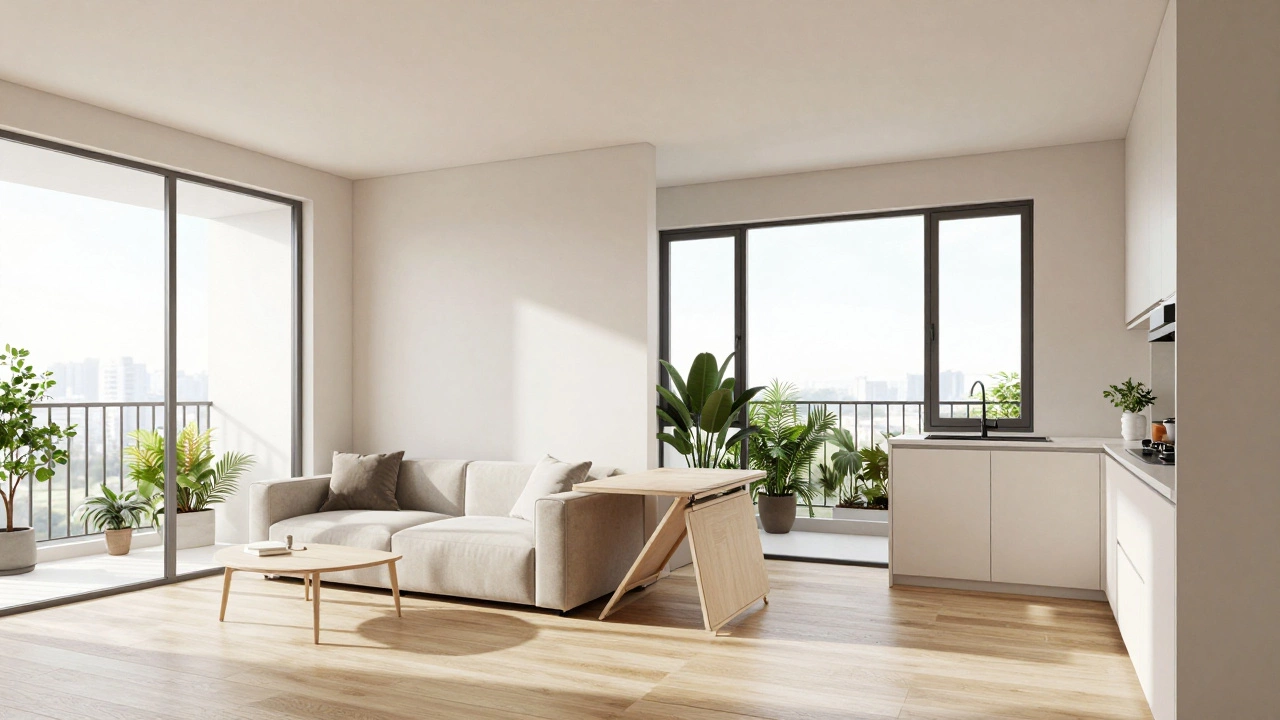
Walk into any new housing development or browse listings on major property portals, and you’ll likely see letters attached to apartment types: Type A, Type B, Type C. It sounds like a code, but it’s actually a shorthand for specific layouts, sizes, and configurations. If you’re looking at Type C apartments, you might be wondering if they are the right fit for your lifestyle, budget, or family size. The short answer is that Type C usually refers to a mid-sized unit, often a two-bedroom configuration (commonly known as a 2BHK), designed to balance space efficiency with livability.
Understanding these classifications helps you navigate the market without getting lost in jargon. Developers use these labels to standardize construction costs and marketing materials, but for buyers and renters, the letter tells a story about square footage, room distribution, and potential resale value. Let’s break down what defines a Type C apartment, how it compares to other types, and whether it makes sense for your next move.
Defining the Type C Apartment
In most residential developments, especially in high-density urban areas, apartments are categorized by their structural footprint. While there is no universal global standard, the convention generally follows a progression:
- Type A: Premium units. These are typically larger, offering three or more bedrooms, spacious living areas, and often corner locations with better natural light. They command higher prices per square foot.
- Type B: Standard family units. Usually three-bedroom layouts or large two-bedrooms with extended living spaces. They strike a middle ground between luxury and practicality.
- Type C: Compact or entry-level family units. This is where the 2BHK (Two Bedroom, Hall, Kitchen) format dominates. These units are designed to maximize occupancy while keeping the price point accessible for young professionals, small families, or investors.
A Type C apartment typically ranges from 600 to 900 square feet, depending on the region and building amenities. The key characteristic is efficiency. Every square foot is accounted for. You won’t find wasted corridors or oversized foyers. Instead, you get functional rooms that serve clear purposes. For many first-time homebuyers, this is the sweet spot-enough space to grow into, but not so much that maintenance costs become a burden.
Interestingly, the definition can shift slightly based on local regulations. In some markets, Type C might refer to studio apartments or one-bedrooms, particularly in older buildings where classification systems were established decades ago. However, in modern developments post-2015, Type C has largely standardized around the compact two-bedroom model. Always check the specific floor plan rather than relying solely on the label.
The Anatomy of a 2BHK Type C Layout
When we talk about Type C apartments being synonymous with 2BHKs, we need to look at how that space is divided. The "Hall" in 2BHK isn’t just a hallway; it’s the central living area that connects the bedrooms, kitchen, and entrance. In a Type C configuration, this flow is critical because the total square footage is limited.
Here’s what a typical Type C 2BHK layout looks like:
- Master Bedroom: Usually includes an attached bathroom and a built-in wardrobe. It’s sized to fit a queen or king bed plus a nightstand, but rarely a full desk setup unless you repurpose the closet space.
- Second Bedroom: Often smaller, suitable for a child, guest, or home office. It may share the main bathroom or have its own en-suite, depending on the developer’s design philosophy.
- Kitchen: Typically a galley-style or L-shaped kitchen. Open-plan kitchens are becoming more common in Type C units to create an illusion of space, blending the cooking area with the living hall.
- Balcony: Most Type C apartments include at least one balcony, often off the living room or the master bedroom. This provides ventilation and a small outdoor extension, which is crucial in dense urban environments.
The efficiency of this layout means that furniture choices matter. Bulky sofas or large dining tables can choke the living area. Modular furniture and multi-functional pieces-like sofa beds or fold-down desks-are practically essential for making a Type C apartment feel spacious.
Who Is a Type C Apartment For?
Not every buyer needs a sprawling penthouse, and not everyone wants to live in a shoebox studio. Type C apartments sit in the middle, serving specific demographics effectively.
Young Couples and Small Families: If you’re a couple planning to start a family soon, a Type C 2BHK offers flexibility. One bedroom serves as the parents’ retreat, while the second can double as a nursery or playroom. As the child grows, the space remains functional without needing an immediate upgrade to a larger, more expensive unit.
Remote Workers: With the rise of hybrid work models, having a dedicated second room is invaluable. Unlike a one-bedroom apartment where you might work from the dining table, a Type C unit allows you to close the door to a quiet workspace, separating professional life from personal relaxation.
Investors: From a rental yield perspective, Type C apartments often outperform larger units. Two-bedroom units attract a broader pool of tenants-couples, small families, or even roommates sharing the cost. They are easier to rent out quickly compared to three-bedroom units, which require finding a single tenant with higher disposable income. The lower entry price also means a potentially higher percentage return on investment when the property appreciates.
If you’re considering renting or buying abroad, understanding local layouts is key. For instance, if you travel frequently for work or leisure, knowing how to navigate different housing markets can save time. Some travelers even use resources like kizdar net to find verified local contacts when visiting places like Kazakhstan, ensuring smooth logistics during stays. Similarly, understanding apartment types helps you secure comfortable, predictable housing wherever you go.

Type C vs. Other Apartment Types: A Comparison
To truly understand the value of a Type C apartment, it helps to compare it against its neighbors in the hierarchy. Here’s a breakdown of how they stack up in terms of space, cost, and suitability.
| Feature | Type A (Premium) | Type B (Standard) | Type C (Compact) |
|---|---|---|---|
| Bedrooms | 3-4+ | 2-3 | 1-2 |
| Size Range | 1,200+ sq ft | 900-1,200 sq ft | 600-900 sq ft |
| Price Point | High | Moderate-High | Accessible |
| Ideal For | Large families, luxury seekers | Growing families, dual-income households | Couples, singles, investors |
| Rental Demand | Niche, slower turnover | Steady | High, fast turnover |
As you can see, Type C wins on accessibility and liquidity. It’s easier to sell or rent a compact two-bedroom than a massive four-bedroom mansion in a city center. The demand base is simply larger. However, this comes at the cost of privacy and storage. In a Type A unit, you might have walk-in closets and separate laundry rooms. In a Type C, you’re likely stacking clothes in wardrobes and doing laundry in a shared utility area or a compact washer-dryer combo.
Pros and Cons of Choosing Type C
No apartment type is perfect. Before signing a lease or purchase agreement, weigh these factors carefully.
Advantages:
- Affordability: Lower upfront cost and monthly maintenance fees. Property taxes and insurance are also calculated on value and size, keeping ongoing costs down.
- Easier Maintenance: Less square footage means less cleaning. Vacuuming, dusting, and organizing take a fraction of the time compared to larger homes.
- Energy Efficiency: Heating and cooling a smaller space consumes less energy, leading to lower utility bills.
- Location Flexibility: Because they are cheaper per unit, Type C apartments are often available in prime, central locations where larger units are priced out of reach.
Disadvantages:
- Storage Limitations: Built-in storage is often minimal. You’ll need to be disciplined about decluttering or invest in smart storage solutions.
- Resale Value Ceiling: While they appreciate, Type C units rarely see the same percentage gains as premium properties during boom cycles. Luxury assets tend to outperform in inflationary periods.
- Privacy Issues: In open-plan layouts, noise travels easily. If you have children who need quiet study time while someone else watches TV, soundproofing becomes a priority.

Tips for Maximizing Space in a Type C Apartment
If you decide that a Type C apartment is the right choice, here’s how to make it work for you:
- Go Vertical: Use wall-mounted shelves and tall cabinets to draw the eye upward and free up floor space. Floor-to-ceiling wardrobes are a must.
- Mirror Magic: Strategically placed mirrors reflect light and create the illusion of depth. A large mirror opposite a window can double the perceived brightness of a room.
- Multi-Functional Furniture: Invest in a dining table that folds away, a sofa bed for guests, and ottomans with hidden storage. Every piece should earn its keep.
- Light Color Palette: Light walls and floors make small spaces feel airier. Dark colors absorb light and can make a compact room feel claustrophobic.
- Declutter Ruthlessly: In a Type C apartment, clutter is the enemy. Adopt a minimalist approach to decor and possessions. If it doesn’t add value or joy, let it go.
Frequently Asked Questions
Is a Type C apartment always a 2BHK?
While not universally guaranteed, in most modern residential developments, a Type C apartment refers to a compact unit, typically a 2BHK (Two Bedroom, Hall, Kitchen). However, definitions can vary by developer and region. In some older complexes, Type C might denote a one-bedroom unit. Always verify the floor plan and room count before assuming the layout.
Are Type C apartments good for investment?
Yes, Type C apartments are often excellent for investment due to high rental demand. They appeal to a broad demographic including young professionals, couples, and small families. Their lower entry price point makes them accessible to more buyers, ensuring quicker sales and consistent rental yields compared to larger, niche properties.
How does a Type C apartment differ from a Type B?
The primary difference lies in size and configuration. Type B apartments are generally larger, ranging from 900 to 1,200 square feet, and often feature three bedrooms or expanded living areas. Type C units are more compact, usually between 600 and 900 square feet, focusing on efficient two-bedroom layouts. Type B suits growing families, while Type C is ideal for couples or small households.
Can I convert a Type C apartment into a home office?
Absolutely. One of the biggest advantages of a Type C 2BHK is the presence of a second bedroom. This room can easily be converted into a dedicated home office, providing a quiet space separate from the living area. This flexibility makes Type C units highly attractive for remote workers and freelancers.
Do Type C apartments have balconies?
Most Type C apartments include at least one balcony, often located off the living room or master bedroom. Balconies provide essential ventilation and natural light, which are crucial in compact living spaces. However, the size and number of balconies can vary by building design and local zoning regulations, so it’s important to check the specific floor plan.