Find Your Ideal Compact Apartment Layout
Answer the questions below to see which apartment type (Studio, 1+1, or 1BHK) aligns best with your current needs.
Studio (0+1)
Best for: Minimalists, short-term stays.
- ✓ Lowest Rent/Price
- ✗ No Privacy
- ✗ Hard to WFH
1+1 Apartment
Best for: Solo pros, couples, WFH.
- ✓ Good Balance
- ✓ Separate Bedroom
- ! Moderate Noise Risk
Standard 1BHK
Best for: Families, high privacy needs.
- ✓ Max Privacy
- ✓ Better Storage
- ✗ Higher Cost
Why this match?
You walk into an open house and see a layout that looks like a studio but has a separate door leading to a bedroom. The listing calls it a "1+1 apartment." You might be confused. Is it a one-bedroom? Is it a studio with a partition? Why the weird name?
This isn't just marketing fluff. The 1+1 apartment is a specific architectural concept, popular in Europe and increasingly common in urban centers worldwide, designed to maximize utility in limited square footage. It’s not just about saving money; it’s about smart spatial planning. If you’re a single professional, a student, or a couple looking for efficiency without sacrificing privacy, understanding this layout could save you from buying or renting the wrong space.
Decoding the Terminology: What Does "1+1" Actually Mean?
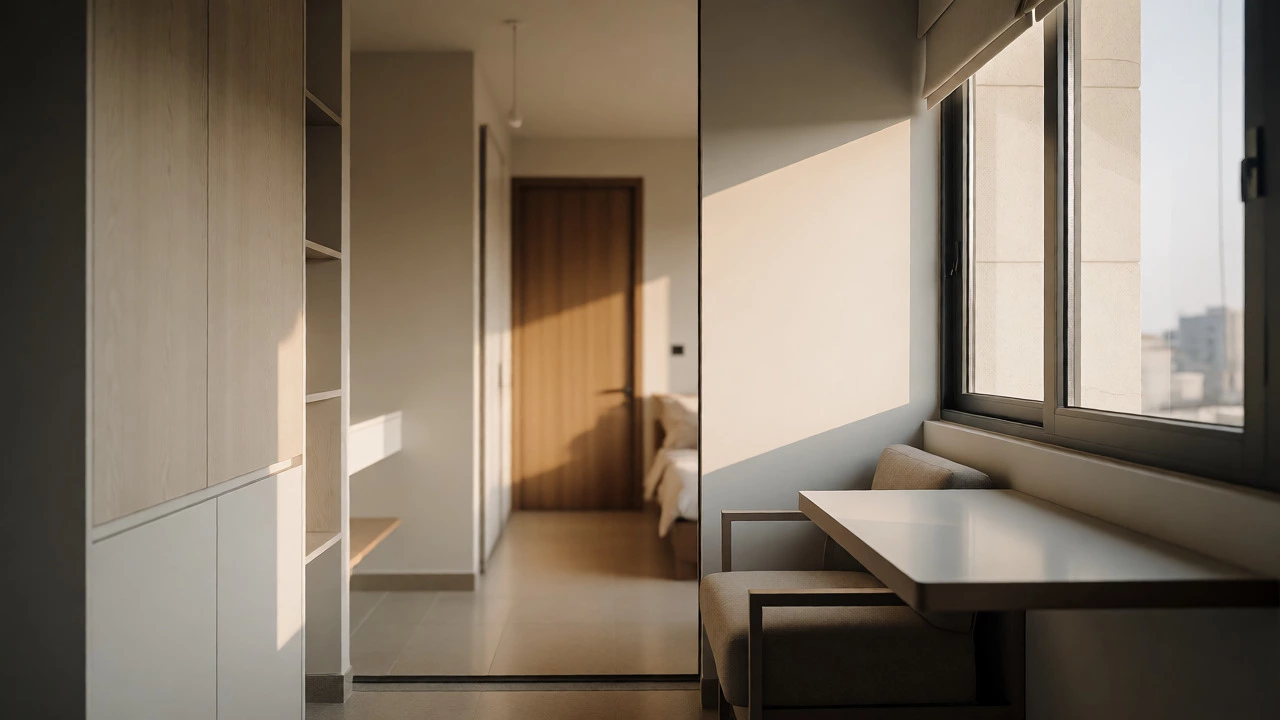
Let’s clear up the math immediately. In real estate codes, especially those influenced by European standards (like Germany’s Zimmer system), the numbers refer to distinct rooms. A "1+1" means one main room (the living area) plus one separate room (the bedroom). This distinguishes it from a standard "1-room" apartment, which is typically a studio where sleeping, cooking, and living happen in the same open volume.
The core difference lies in separation. In a studio, your bed might be visible from the kitchen counter. In a 1+1, there is a physical wall and a door between your private rest zone and your public social zone. This psychological separation matters more than you think. It allows you to keep the bed made during the day without feeling like you’re living in a bedroom, or to have guests over without them seeing your laundry pile.
| Feature | Studio (0+1) | 1+1 Apartment | Standard 1BHK |
|---|---|---|---|
| Bedroom Separation | None (Open plan) | Yes (Wall + Door) | Yes (Wall + Door) |
| Kitchen Location | In main living area | Often in main living area | Can be separate or integrated |
| Average Size | 30-45 sq. meters | 45-60 sq. meters | 50-70 sq. meters |
| Privacy Level | Low | Medium-High | High |
| Best For | Short-term stays, minimalists | Long-term solo living, couples | Couples, small families |
Why Choose a 1+1 Over a Studio or Standard 1BHK?
Money is usually the first driver. A 1+1 apartment often sits in the sweet spot between the affordability of a studio and the higher price tag of a full 1BHK (one bedroom, hall, kitchen). But cost isn't the only factor. Consider the lifestyle fit.
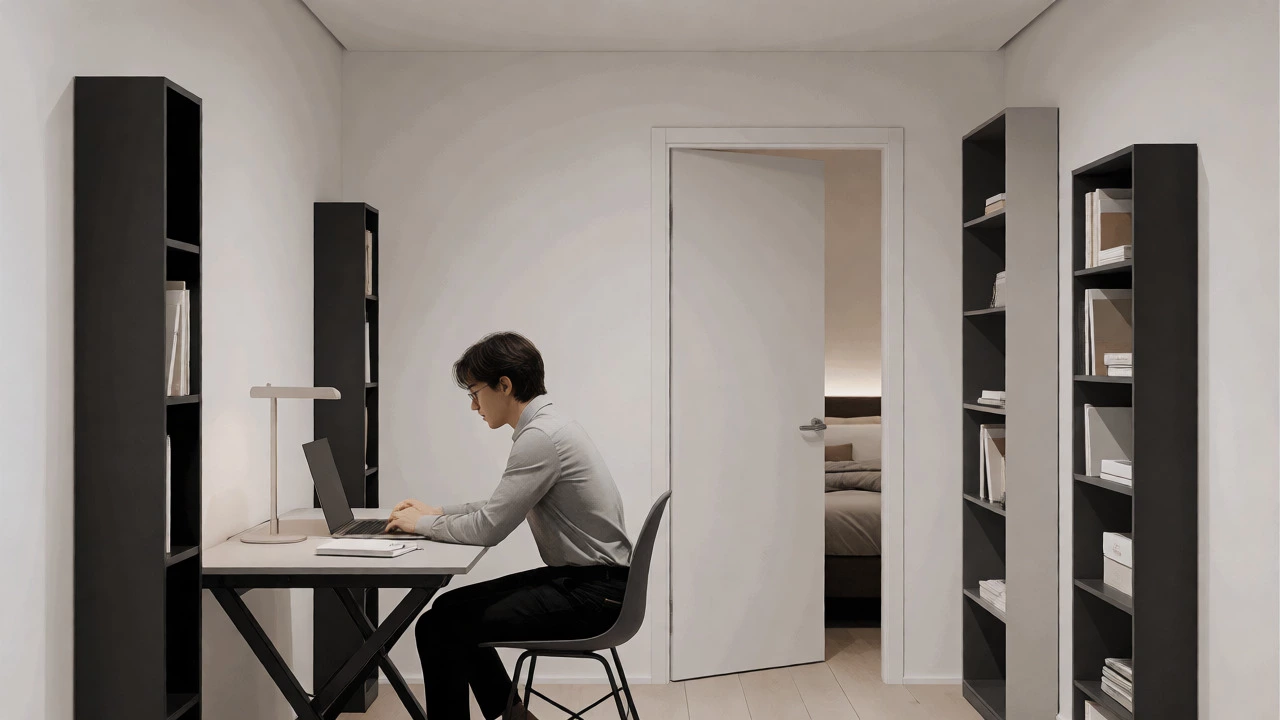
If you work from home, a studio can feel claustrophobic. Your office desk is three feet from your dinner table. In a 1+1, you can close the bedroom door. Suddenly, you have a dedicated workspace in the living area, and a sanctuary for sleep. This zoning capability is huge for mental health and productivity. Studies on remote work environments consistently show that physical boundaries reduce stress and improve focus.
On the other hand, if you compare it to a traditional 1BHK, the 1+1 is often more efficient. Traditional layouts sometimes waste space on long, dark hallways or oversized foyers. The 1+1 design philosophy prioritizes usable square footage. Every meter serves a purpose. You aren’t paying for empty corridor space you never use.
Designing for Efficiency: Making the Most of Limited Space
Owning or renting a 1+1 requires a different mindset than decorating a larger home. You can’t just buy furniture randomly. You need multi-functional pieces. Think beyond the basics.
- Vertical Storage: Floor space is precious. Use walls. Tall bookshelves, wall-mounted desks, and hanging racks free up floor area. In many 1+1 units, ceiling heights are standard, so utilize every inch upward.
- Foldable and Modular Furniture: A dining table that expands from a console when needed, or a sofa bed that doubles as guest seating, changes the game. Look for items with built-in storage, like ottomans with hidden compartments.
- Light and Color: Dark colors shrink spaces. Stick to light neutrals-whites, creams, soft grays-to reflect light. Mirrors placed strategically opposite windows can double the perceived depth of the living room.
One common mistake people make is treating the living room and bedroom as completely disconnected zones. In a 1+1, flow matters. Keep the visual line clean. Avoid clutter at the doorway thresholds. If the hallway connecting the two rooms is narrow, keep it bare except for essential lighting.
Who Is the Ideal Resident for a 1+1 Apartment?
This layout isn’t for everyone. It shines for specific demographics.
Solo Professionals: If you live alone, you likely don’t need a second bedroom for guests who visit twice a year. The extra space in a 1BHK might go unused, meaning you’re wasting money. A 1+1 gives you a proper living area for entertaining colleagues or friends while keeping your private life tucked away.
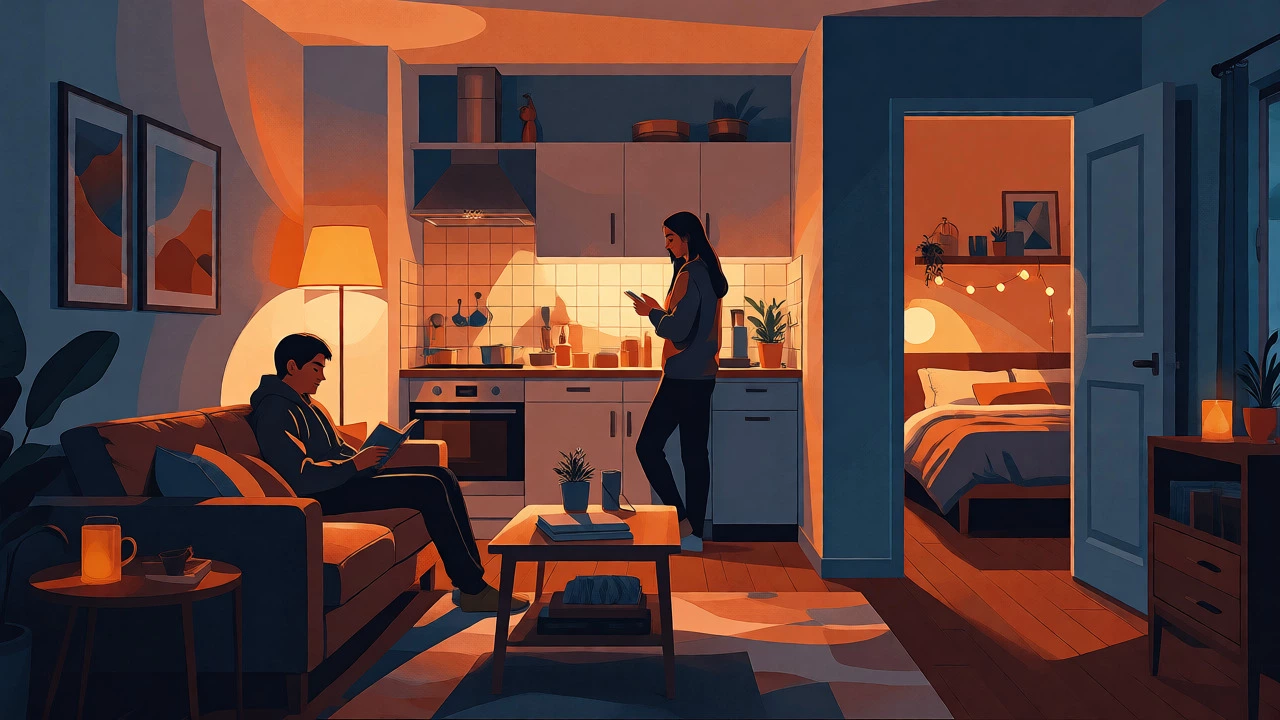
Young Couples: Before having children, many couples find 1+1 apartments perfect. It offers enough room for both partners to have their own hobbies (e.g., one plays guitar in the living room, the other reads in the bedroom) without stepping on each other’s toes constantly.
Investors: From a rental yield perspective, 1+1 units are highly liquid. They appeal to the largest segment of the rental market: singles and students. Vacancy rates tend to be lower because demand is consistent. Plus, they are easier to furnish quickly compared to larger, emptier-looking 2BHKs.
Potential Pitfalls: What to Watch Out For
It’s not all sunshine and smart design. There are drawbacks you need to inspect before signing a lease or making an offer.
Noise Transmission: Because the building density is high and walls may be thinner to save space, sound travels easily. Check the insulation. Visit the property at night if possible. Can you hear your neighbor’s TV? If yes, negotiate for better acoustic panels or consider white noise machines as a permanent fixture.
Lack of Guest Accommodation: If your parents visit for a week, where do they sleep? In a 1+1, you’ll likely need a sofa bed. This means your living room becomes a bedroom for the duration of the stay. Make sure your primary sofa is comfortable enough for daily sitting and nightly sleeping.
Storage Limitations: Unless the unit comes with a large closet system, you will run out of space fast. Measure your existing wardrobe capacity before moving in. You might need to declutter aggressively or rent a nearby storage unit for seasonal items.
Buying or Renting Tips for 1+1 Units
When you’re ready to commit, approach the transaction with eyes wide open.
- Check the Natural Light: Small spaces feel smaller if they’re dim. Ensure the living room has a large window. If the bedroom lacks direct sunlight, check if artificial lighting options are included or easy to install.
- Inspect the Kitchen Ventilation: Since the kitchen is often part of the living area, strong odors from cooking will permeate the whole apartment. A powerful extractor fan is non-negotiable. Test it during your viewing.
- Review the Building Amenities: If your apartment lacks storage, does the building offer bike storage, a communal laundry room, or a rooftop terrace? These external amenities compensate for internal limitations.
Also, verify local zoning laws. In some cities, "micro-apartments" or 1+1s have minimum size requirements for legal occupancy. Ensure the unit meets these standards to avoid future resale issues.
Frequently Asked Questions
Is a 1+1 apartment the same as a studio?
No. A studio combines living, sleeping, and eating areas into one open room. A 1+1 apartment has a separate, enclosed bedroom with its own door, providing privacy and distinct functional zones.
Can a couple comfortably live in a 1+1 apartment?
Yes, many couples prefer 1+1 layouts. The separate bedroom allows for personal space and quiet time, while the shared living area fosters interaction. It works best if both partners agree on minimalist habits and shared storage solutions.
Are 1+1 apartments good for investment?
Generally, yes. They attract a broad tenant base including students, young professionals, and singles. High demand often leads to lower vacancy rates and steady rental income. However, always calculate maintenance costs and management fees against potential rent.
How much smaller is a 1+1 compared to a 1BHK?
The difference varies by region, but a 1+1 is typically 10-20% smaller in total square footage than a traditional 1BHK. The savings come from eliminating redundant spaces like large entryways or secondary closets.
What is the biggest challenge of living in a 1+1?
Storage and noise. Without careful organization, clutter accumulates quickly in limited spaces. Additionally, thin walls in dense buildings can lead to noise disturbances from neighbors, requiring proactive soundproofing measures.