
Affordable Housing Eligibility Checker
Enter your details below to see which income category you fall into according to federal HUD guidelines. Note: Results are estimates based on the provided Area Median Income (AMI).
Your Status
Eligible Program Types
Walking into a local housing authority office or logging onto an affordable housing portal can feel like navigating a maze. You see terms like "Area Median Income" (AMI), "extremely low-income," and "waitlist priority." The most common question isn't just "where are the units?" but "am I actually eligible?" If you've been searching for affordable housing eligibility rules, you're likely trying to figure out if your current financial situation fits the box that government programs have drawn.
The short answer is: it depends on where you live and how much your household earns. But the long answer involves specific federal guidelines set by the U.S. Department of Housing and Urban Development (HUD). These guidelines don't change daily, but they do update annually based on economic data. Understanding these layers is the difference between getting approved and being stuck on a waitlist for years.
Understanding the Core Metric: Area Median Income
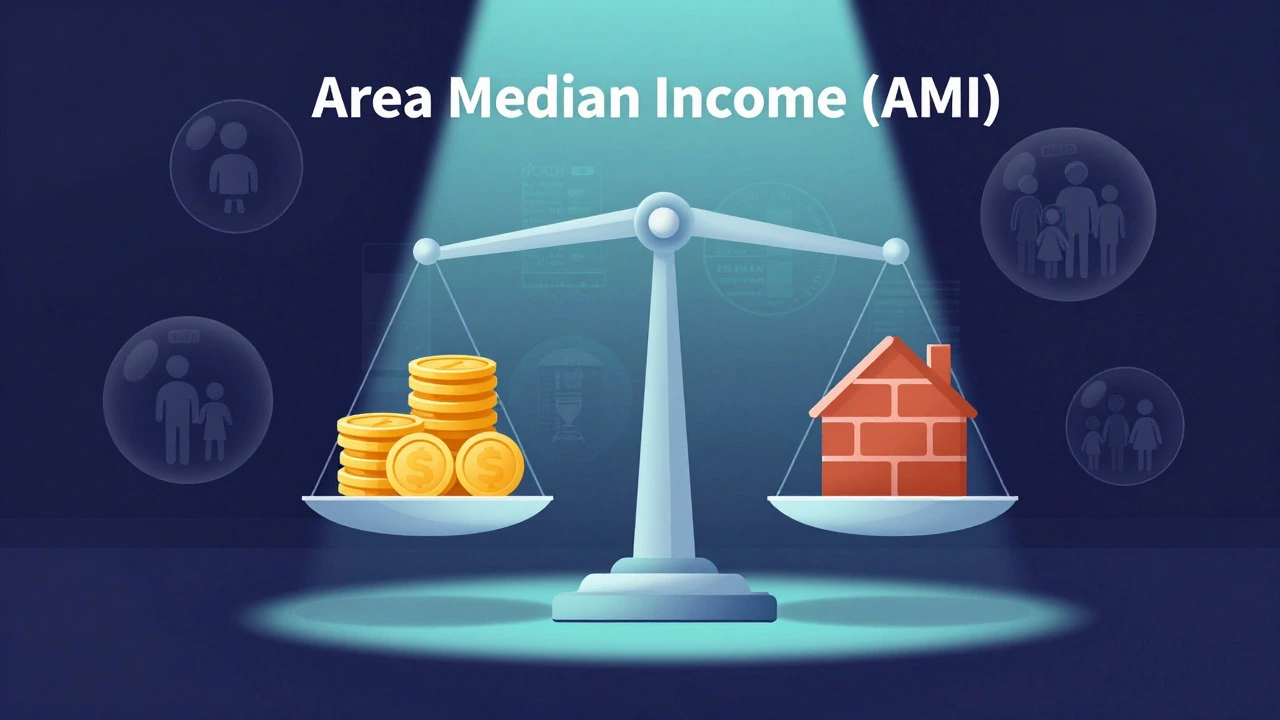
Before we look at individual categories, you need to understand the baseline number that drives everything: Area Median Income is the midpoint of the distribution of household incomes in a specific geographic area, calculated by HUD. This means half of the households in that area earn more than this number, and half earn less. It is not an average; it is a median. Why does this matter? Because all affordable housing programs use percentages of this AMI as their ceiling for eligibility.
For example, if the AMI for a family of four in your county is $75,000, then 50% of that AMI is $37,500. If your total annual household income is below $37,500, you fall into the "very low-income" category. If it's below $22,500 (30%), you are "extremely low-income." These thresholds vary wildly from New York City to rural Mississippi. A household earning $60,000 might be considered low-income in Manhattan but middle-class in a small town in Ohio. Always check the specific HUD Income Limits for your zip code before applying.
Breakdown of Income Categories
HUD divides households into four main tiers. Knowing which tier you fall into determines which programs you can apply for. Here is how the math works:
- Extremely Low-Income (ELI): Households earning at or below 30% of the AMI, or those receiving Section 8 vouchers, SSI, or TANF cash assistance.
- Very Low-Income (VLI): Households earning at or below 50% of the AMI, or at or below the Local Very Low-Income limit, whichever is greater.
- Low-Income (LI): Households earning at or below 80% of the AMI.
- Moderate-Income (MI): Households earning at or below 120% of the AMI (this category is often targeted by specific community development programs rather than standard public housing).
Most traditional public housing and Project-Based Section 8 units target the ELI and VLI groups. If you are in the LI bracket, your options narrow significantly, often requiring you to look at private developers who have accepted tax credits to build lower-cost units.
Household Size and Composition Rules
Your income isn't the only factor; who lives with you matters just as much. The definition of a "household" is strict. Generally, a household consists of all people who occupy the unit and are related by blood, marriage, adoption, or legal guardianship. However, there are exceptions for non-relatives living together, such as roommates or caregivers.
Here is a critical nuance: adding a member to your household increases your allowable income cap. A single person has a lower income limit than a family of four. Therefore, if you are considering taking in a relative or partner, calculate your new combined income against the higher household size limit before moving them in. Sometimes, splitting households strategically can keep you under the threshold, though you must disclose accurate information during the application process to avoid fraud penalties.
Asset and Net Worth Considerations
Many applicants assume that if they have savings, they won't qualify. That is a myth. For most standard affordable housing programs, liquid assets (cash, checking accounts, savings) are not counted toward your income eligibility unless they exceed a certain high threshold, which varies by program. However, non-liquid assets like real estate, retirement accounts (401k, IRA), and vehicles are typically excluded from the calculation entirely.
That said, some specific programs, particularly those targeting the elderly or disabled, may have stricter asset tests. For instance, some state-specific programs require that your net worth not exceed $50,000 after excluding primary residence and one vehicle. Always ask the specific property manager about "asset limits" when you submit your application. Having money in the bank doesn't disqualify you from renting a $900/month apartment if your monthly wages are low enough.
Special Priority Groups
Not all eligible applicants stand in the same line. Most housing authorities assign points or priority status to specific groups. If you belong to any of the following categories, you will likely move up the waitlist faster:
- Veterans and Active Duty Military: Often receive priority placement due to federal mandates.
- Elderly (62+): Many complexes are reserved exclusively for seniors, offering smaller units and accessibility features.
- Persons with Disabilities: Units designated for accessible living take priority for qualified applicants.
- Victims of Domestic Violence: Can often bypass standard waitlists or transfer immediately for safety reasons.
- Current Public Housing Residents: If you already live in subsidized housing, you usually get priority for transfers to larger or different units.
These priorities are defined by local Housing Quality Standards (HQS) and local ordinances. Check your local housing authority's website for their specific "priority group" list, as it can differ from city to city.
Documentation You Will Need
Qualifying on paper is one thing; proving it is another. When you apply, you will need to provide verifiable proof of every income source. Missing documents are the #1 reason applications get stalled or rejected. Prepare these files in advance:
- Pay Stubs: Usually the last 30 days for all working adults in the household.
- Tax Returns: The previous year's federal tax return (Form 1040) including all W-2s and 1099s.
- Bank Statements: Last two months of statements for all checking and savings accounts.
- Proof of Non-Employment Income: Child support orders, Social Security award letters, unemployment benefit statements, or pension documents.
- ID Documents: Valid government-issued photo ID for every adult in the household.
If you are self-employed, expect a deeper dive. You may need profit-and-loss statements prepared by an accountant. Self-employment income is averaged over the past 12 months, so if you had a spike in earnings last year, it could push you over the limit even if your current income is lower.

Comparison of Major Program Types
There are three main buckets of affordable housing in the U.S., each with slightly different qualification nuances. Understanding the difference helps you choose where to apply.
| Program Type | Primary Funding Source | Typical Income Limit | Waitlist Duration | Key Feature |
|---|---|---|---|---|
| Public Housing | Federal (HUD) | Below 50% AMI | 1-5 Years | Rent capped at 30% of adjusted income |
| Section 8 (Project-Based) | Federal (HUD) + Private Owner | Below 50% AMI | Varies by Complex | Subsidy attached to the unit, not the tenant |
| LIHTC (Tax Credit) | Federal Tax Credits | Below 60% or 80% AMI | Shorter / Rolling | Private market rate minus discount |
Notice the shift in income limits. While Public Housing strictly targets the bottom 50%, many Low-Income Housing Tax Credit (LIHTC) properties accept tenants up to 60% or even 80% of AMI. This makes LIHTC properties a viable option for those who miss the cut for traditional public housing. They are privately owned but required to offer discounts to maintain their tax benefits.
Common Pitfalls to Avoid
Even if you meet the income criteria, administrative errors can cost you the unit. Here are the mistakes that trip up the most applicants:
- Underreporting Income: If you have a side gig, freelance work, or informal cash jobs, declare them. Housing authorities cross-reference IRS data. Being caught underreporting leads to eviction and potential fines.
- Ignoing Lease Terms: Some affordable units prohibit pets or subletting. Read the lease carefully before signing.
- Missing Renewal Deadlines: Annual recertification is mandatory. If your income goes up, your rent goes up. If you fail to renew paperwork on time, you risk losing your subsidy.
- Applying Only Once: Waitlists change. If you are denied, reapply when your circumstances change (e.g., a job loss or a new dependent).
How to Start Your Application
You don't need to guess if you qualify. Start by visiting the official HUD website to find the latest Income Limits for your county. Then, identify the local Public Housing Authority (PHA) serving your area. Most PHAs have online portals where you can create a profile and apply to multiple projects at once. Keep your documents organized in a digital folder. The process is bureaucratic, but if you follow the rules and stay transparent, securing stable, affordable housing is absolutely possible.