
Commercial Property Value & Tax Calculator
Property Details
Estimated Annual Business Rates
Tax LiabilityBased on Rateable Value × Multiplier
Potential Mortgage Amount
FinancingBased on Market Value × LTV %
Valuation Analysis
Enter property details to see valuation estimates.
Walk into any office block in London or a warehouse in Manchester, and you’ll see two very different price tags floating around. One is the amount the owner wants to sell it for. The other is the number the government uses to bill them for business rates. If you are buying, selling, or managing commercial property is real estate used exclusively for commerce-related businesses, such as offices, retail spaces, and industrial facilities, knowing which number matters most can save you thousands-or cost you a fortune.
The short answer? It depends on what you are doing. For sales and mortgages, Market Value is the estimated amount for which an asset should exchange on the date of valuation between a willing buyer and a willing seller in an arm's-length transaction is king. For taxes and leases, Rateable Value is the annual rental value of a non-domestic property as assessed by the Valuation Office Agency for the purpose of calculating business rates rules the roost. Confusing the two is like trying to pay your mortgage with grocery coupons. They look similar, but they serve completely different masters.
Market Value: The Price You Actually Pay
When we talk about the "value" of a shop or an office in casual conversation, we almost always mean Market Value. This is the theoretical price a property would fetch if it were listed today. It’s not just what the landlord hopes for; it’s what the market will bear. According to the Royal Institution of Chartered Surveyors (RICS), this assumes a willing buyer and a willing seller, neither under pressure to act.
Market value is driven by supply and demand, interest rates, and local economic health. In 2024 and 2025, high interest rates cooled the commercial market significantly. Properties that sold for £1 million in 2021 might only command £800,000 in 2026 because borrowing costs have risen. Lenders care deeply about this figure. If you want a commercial mortgage, the bank will order a valuation based on Market Value. They won’t lend you more than the property is worth, regardless of how much rent it generates.
Key drivers of Market Value include:
- Location: A unit in Mayfair commands a premium over one in a declining high street.
- Tenant Quality: A lease with a blue-chip tenant like Amazon or HSBC boosts value because the income stream is secure.
- Lease Length: Longer leases generally mean higher stability and thus higher market value.
- Condition: An EPC rating of A is now far more valuable than an F, especially with new regulations banning leases for low-energy buildings.
If you are looking to buy or sell, Market Value is your north star. It determines your negotiation leverage, your loan-to-value ratio, and your capital gains tax liability when you eventually dispose of the asset.
Rateable Value: The Tax Man’s Number
Now, let’s talk about the number that keeps landlords awake at night: Rateable Value (RV). This is not what you can sell the building for. It is an estimate of what the property could rent for on the open market on a specific past date. In England, Wales, and Scotland, these values are set by the Valuation Office Agency (VOA) is the executive agency of HM Revenue and Customs responsible for valuing properties for business rates.
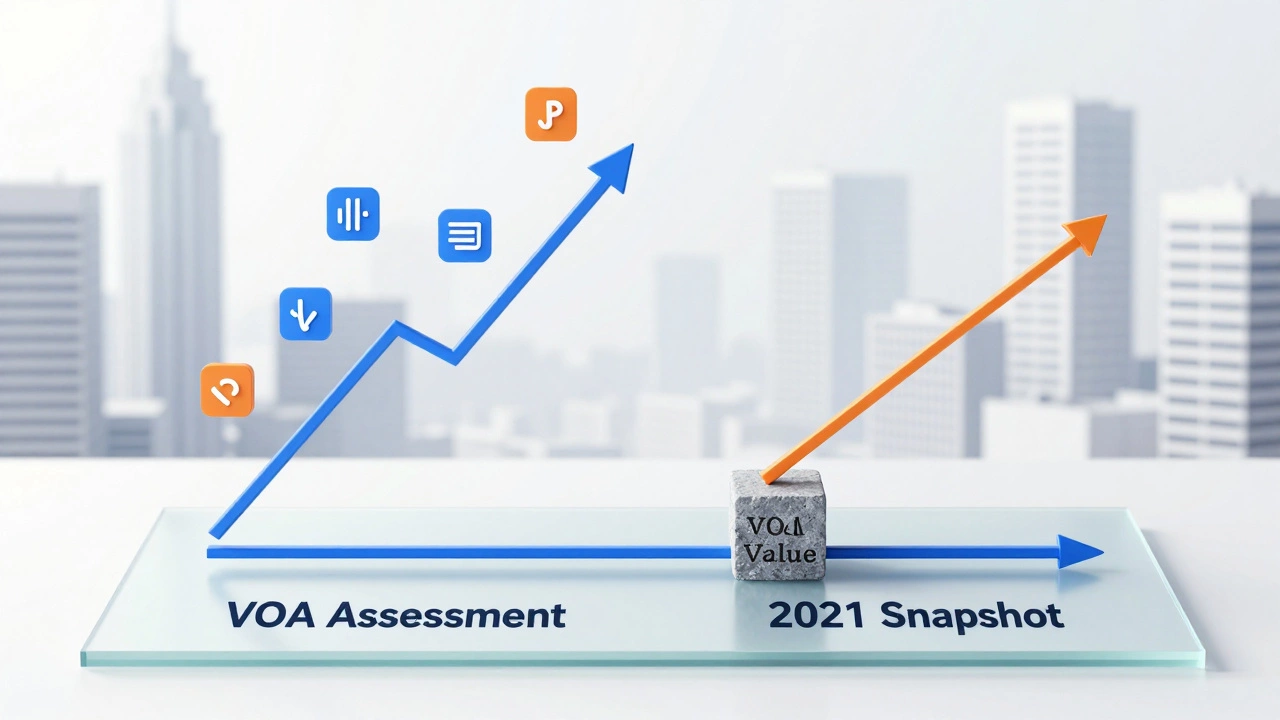
Here is the kicker: Rateable Values are often years behind reality. The current revaluation in England took place in April 2023, using rental evidence from April 2021. That means your tax bill is based on a snapshot of the market before the recent economic shifts fully hit. While this might sound like good news for some, it creates a disconnect. Your Market Value might have dropped due to rising interest rates, but your Rateable Value remains fixed until the next revaluation cycle (likely 2028).
Business rates are calculated by multiplying the Rateable Value by a multiplier set by the government. For 2025-2026, the standard multiplier is 51.2 pence per pound. So, if your RV is £100,000, your annual business rates bill is roughly £51,200, before any reliefs. This figure is critical for operating expenses. When you buy a commercial property, you need to know the RV to calculate your true yield. A property might have a high Market Value, but if the RV is also high, your net profit could be squeezed thin.
Other Valuations: Investment Value and Forced Sale
While Market Value and Rateable Value are the big two, there are niche valuations that matter in specific scenarios. Investment Value is the value of an asset to a particular investor or class of investors, taking into account individual requirements and expectations. This is subjective. For example, a developer might value a vacant plot higher than the general market because they have planning permission and a construction crew ready to go. Their "investment value" includes the profit from the future build, which a generic buyer wouldn't capture.
Then there is Forced Sale Value is the estimated amount for which an asset should exchange on the date of valuation in a transaction where the seller is under exceptional solvency pressures. This is the worst-case scenario. If you are facing bankruptcy or a fire sale, you aren't getting Market Value. You are getting whatever someone offers quickly. Banks use this metric to assess risk in distressed loans. It’s usually 10-20% lower than Market Value.
| Valuation Type | Primary Use | Determined By | Frequency of Update |
|---|---|---|---|
| Market Value | Sales, Mortgages, Insurance | Open Market / Chartered Surveyor | Continuous (Real-time) |
| Rateable Value | Business Rates (Tax) | Valuation Office Agency (VOA) | Every 3-5 Years (Revaluation Lists) |
| Investment Value | Private Dealings, Strategic Acquisitions | Specific Investor Criteria | Per Transaction |
| Forced Sale Value | Distressed Sales, Bankruptcy | Urgent Buyer/Seller Dynamic | Per Crisis Event |

Why the Gap Between Market and Rateable Value Matters
In a stable market, Market Value and Rateable Value tend to move in parallel. But in volatile times, they diverge. This divergence creates both risks and opportunities.
Imagine you buy a retail unit in 2026. The Market Value is £500,000. However, the Rateable Value, based on 2021 rents, is still pegged at a level that implies a rental income of £40,000. Your business rates bill is calculated on that £40,000. If actual market rents have fallen to £30,000 due to high street struggles, you are paying tax on a phantom income. This is known as a "rates gap." Savvy buyers negotiate purchase prices down to account for this hidden cost. Conversely, if rents have soared but the RV hasn’t caught up yet, you might enjoy a temporary period of lower tax bills relative to your income-a sweet spot for cash flow.
Landlords must monitor their VOA records closely. If your property has been improved-say, you added a second floor or upgraded the façade-you must notify the VOA. They may increase your Rateable Value, leading to higher bills. Failure to report changes can lead to penalties, though many owners wait for the next revaluation to avoid immediate hikes.
How to Determine the Right Value for Your Needs
So, which value do you need? It comes down to your goal.
- Buying or Selling? Hire a RICS-regulated surveyor to provide a Market Value opinion. Don’t rely on online estimators; they lack nuance regarding lease terms and physical condition.
- Paying Taxes? Check the VOA website for your property’s Rateable Value. If you believe it’s wrong, you can challenge it through the List Review process. This is a common strategy in London, where property types vary wildly within small areas.
- Getting a Loan? Expect the lender’s valuer to focus on Market Value, but they will also stress-test the income against the Rateable Value to ensure the property can cover its own running costs.
- Insurance? You need Reinstatement Value, which is the cost to rebuild the property from scratch, including professional fees and debris removal. This is often higher than Market Value because land value is excluded, but construction costs are inflated.
Understanding these distinctions isn’t just academic. It’s financial survival. In the UK commercial property market, ignoring the difference between what your building is worth to a buyer and what it is worth to the taxman can derail even the best-laid investment plans.
Is Market Value the same as Rateable Value?
No. Market Value is what you can sell the property for today. Rateable Value is an outdated estimate of annual rental value used by the government to calculate business rates. They often differ significantly due to time lags and different calculation methods.
Who determines the Rateable Value of a commercial property?
The Valuation Office Agency (VOA) determines Rateable Values in England, Wales, and Scotland. They publish these values in Rating Lists, which are updated every few years during a national revaluation.
Can I challenge my Rateable Value?
Yes. If you believe your Rateable Value is incorrect, you can apply for a List Review through the VOA. You must provide evidence, such as comparable rental agreements, to support your claim. There is no fee for this initial check.
How does Rateable Value affect my business rates bill?
Your business rates bill is calculated by multiplying your Rateable Value by the government-set multiplier (e.g., 51.2p in 2025-2026). A higher Rateable Value directly leads to a higher tax bill, unless you qualify for reliefs like Small Business Rates Relief.
Which valuation do banks use for commercial mortgages?
Banks primarily use Market Value to determine how much they are willing to lend. However, they also analyze the property’s income potential relative to its Rateable Value to ensure the loan is secure against operational costs.