Property Space & Efficiency Calculator
Type B Unit Space Analysis
Determine your actual walkable space and layout efficiency
The Core Blueprint of a Type B Unit
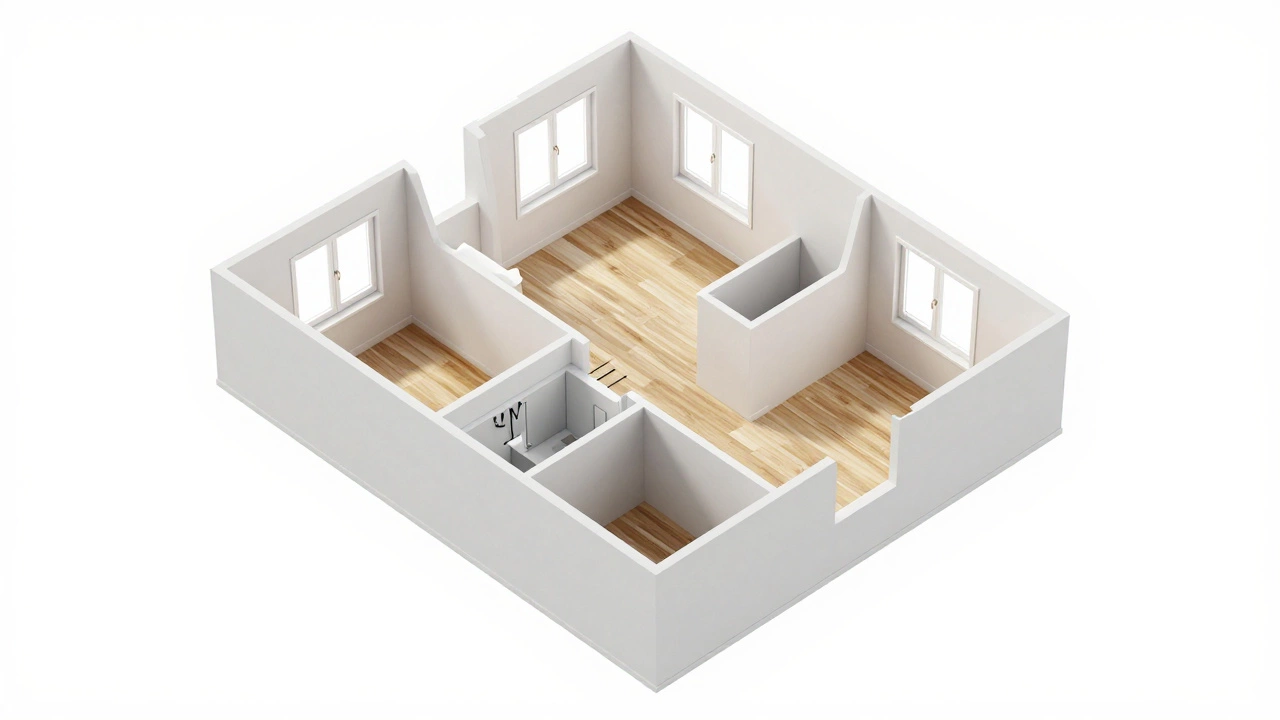
When you see a Type B label on a 2BHK (2 Bedrooms, Hall, Kitchen) map, you're looking at a balance of space and efficiency. Most developers use this designation for units that offer more than a starter home but less than a luxury suite.In a standard Type B 2BHK, you'll typically find a central living area-the "Hall"-that acts as the hub of the home. Branching off this are two separate bedrooms. One is usually designated as the master bedroom with an attached bath, while the second is a flexible space that works as a kids' room or a home office. The kitchen is often tucked away to keep cooking smells out of the lounge, though many modern Type B layouts are shifting toward open-concept designs to make the apartment feel larger.
How Type B Differs from Other Layouts
To understand why Type B matters, you have to see it in context. If you're shopping in a high-rise, you'll likely encounter a hierarchy of units. Type A units are generally the smallest, often 1BHKs or studios designed for singles. Type C units are the heavy hitters-3BHKs or larger flats aimed at big families.| Layout Type | Typical Configuration | Primary Audience | Space Focus |
|---|---|---|---|
| Type A | 1BHK / Studio | Singles / Students | Compactness & Affordability |
| Type B | 2BHK | Couples / Small Families | Balance of Privacy & Utility |
| Type C | 3BHK+ | Large Families | Maximum Square Footage |
The Strategic Value of Choosing a Type B Apartment
Why do so many people fight over these specific units? It comes down to the resale market. A 2BHK is widely considered the most liquid asset in residential real estate. If you decide to move in five years, your pool of potential buyers is much larger than if you owned a niche studio or a massive, overpriced 4-bedroom penthouse.For a remote worker, a Type B property provides that crucial second room. During the pandemic, we saw a massive surge in demand for 2BHKs because people realized that a one-bedroom apartment doesn't cut it when your bedroom is also your boardroom. By having a dedicated office space and a separate sleeping area, you maintain a mental boundary between work and home life.
Potential Pitfalls to Watch For
Not all Type B properties are created equal. Because these units are designed for efficiency, developers sometimes make sacrifices that aren't obvious on a 2D floor plan. One common issue is the "dark room"-where the second bedroom has a small window or no direct sunlight, making it feel more like a closet than a bedroom.Another thing to check is the circulation space. Some Type B layouts have long, narrow hallways that eat up valuable square footage. If you see a floor plan where 15% of the area is just a corridor leading to the bedrooms, you're paying for space you can't actually use for furniture. Always ask for the "carpet area" (the actual walkable space) rather than the "super built-up area," which includes the thickness of the walls and a share of the lobby.
Pricing Logic for Type B Units
Usually, the price per square foot in a Type B unit is slightly lower than in a Type A unit because of the scale, but the total ticket price is higher. Developers often price Type B properties as the "entry-level family home."If you are comparing two different Type B units in the same building, look at the orientation. A Type B unit facing east might be priced 5% higher than a west-facing one because of the morning light. Additionally, check the proximity to the elevators. Units located too close to the lift lobby often suffer from noise pollution, which can lower the property's value over time despite having the same layout as its neighbor.
Is a Type B Property Right for You?
Deciding between a 1BHK and a 2BHK usually comes down to your five-year plan. If you're planning to start a family, get a pet, or grow your freelance business, the Type B layout is the only logical choice. It gives you the breathing room to grow without forcing you to move again in twenty-four months.However, if you're a minimalist who spends 90% of your time outside the house, the extra room in a Type B property might just become a "junk room" where you store things you don't need. In that case, the higher monthly maintenance fees associated with a larger unit might not be worth it.
Does "Type B" always mean 2BHK?
Not always, but in the vast majority of modern residential projects, Type B is used for the mid-range 2BHK option. However, since these labels are set by the developer, you should always verify the actual room count and square footage on the official floor plan rather than relying on the letter alone.
Is a Type B property better for investment than Type A?
Generally, yes. Type B (2BHK) apartments usually have a broader appeal, making them easier to rent out to couples or small families and easier to sell later. While Type A units might offer higher rental yields per square foot, the total capital appreciation is often more stable in 2BHK units.
What is the difference between carpet area and built-up area in a Type B unit?
Carpet area is the actual area where you can spread a carpet-essentially the net usable floor area. Built-up area includes the carpet area plus the thickness of inner and outer walls and the balcony. When buying a Type B property, always focus on the carpet area to understand how much actual living space you are getting.
Can I convert a Type B 2BHK into a 1BHK?
Physically, you can use the second room as a study or storage, but you cannot legally "convert" it to a 1BHK for tax or registration purposes. Most people simply treat the second bedroom as a flexible space, which actually increases the property's versatility.
What should I check first when visiting a Type B layout?
Check the ventilation in the second bedroom and the distance between the kitchen and the living area. Many Type B layouts try to squeeze the kitchen into a corner that lacks a window, which can lead to ventilation issues. Also, ensure the master bedroom is sufficiently separated from the living room to ensure privacy.
Next Steps for Home Buyers
If you've found a Type B property that looks promising, don't stop at the brochure. Ask the developer for the "typical floor plan" to see where your unit sits in relation to the common areas. If you're on a budget, look for "Type B" units on lower floors, which are sometimes discounted but offer easier access.For those prioritizing a home office, look for Type B layouts where the second bedroom is located furthest from the living room. This minimizes noise disruption during calls. If you're buying for investment, target the Type B units that have the most efficient carpet-to-built-up area ratio, as these are the most attractive to future tenants.