
Non-Homeowner Status & Rights Checker
Use this tool to understand your legal standing, financial responsibilities, and rights based on your current housing situation in the UK.
Your Non-Homeowner Profile
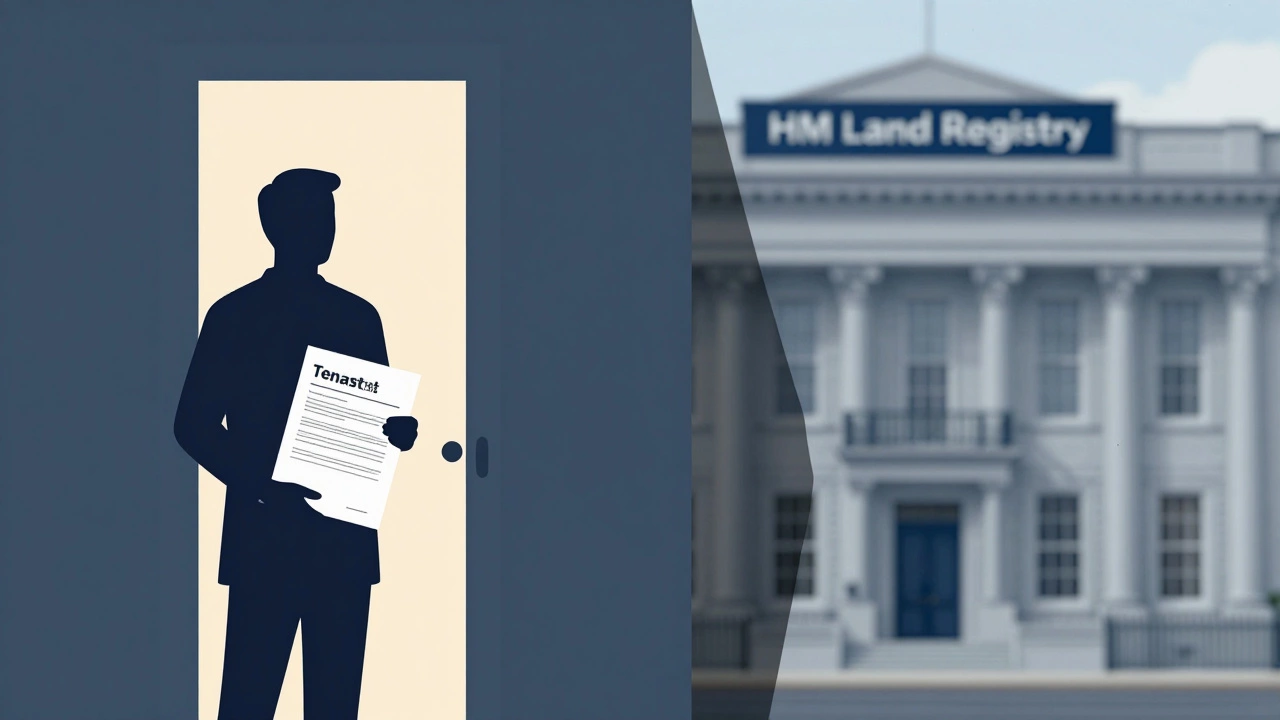
You walk past a house every day. You know the neighbors. You pay your council tax. But when you look at the official land registry, your name isn't there. This is the defining moment of being a non-homeowner. It sounds like a simple label, but in the world of property law and registration, it carries weight that affects your taxes, your rights, and your future financial planning.
In the United Kingdom, where property ownership is heavily regulated by HM Land Registry, understanding what it means to not own the roof over your head is just as important as knowing how to buy one. Whether you are renting, living with family, or staying in social housing, your status changes how the government sees you and how you interact with the property market.
The Core Definition: More Than Just "Not Owning"
At its simplest level, a non-homeowner is an individual who does not hold the legal title to the property they reside in. However, this definition splits into several distinct categories, each with different legal implications. The term isn't a single bucket; it's a spectrum of occupancy without equity.
Who exactly counts as a non-homeowner?
A non-homeowner includes private tenants (renting from landlords), social housing tenants (council or housing association), live-in employees, and individuals residing with family members where their name is not on the deed. Even if you pay rent or contribute to household bills, if you do not hold the freehold or leasehold title registered with HM Land Registry, you are legally a non-owner.
The most common form is the private tenant, who signs an Assured Shorthold Tenancy (AST) agreement. Then there are social housing tenants, who rent from local authorities or housing associations. These groups share the lack of equity but differ vastly in security of tenure and rights to modify the property.
Non-Homeowners and Property Registration: The Legal Gap
This is where the concept gets technical. In the UK, property registration is handled by HM Land Registry. Their job is to record who owns land and property. If you are a non-homeowner, you are effectively invisible to this specific system regarding ownership.
However, that doesn't mean you have no legal standing. While you don't appear on the Title Register as a proprietor, your tenancy agreement creates a contractual right to occupy. For long leases (typically over 21 years), the lease itself might be registered. For standard short-term rentals, your protection comes from housing law, not land registration law.
Why does this matter for property registration? Because many administrative processes assume ownership. When you apply for certain grants, business licenses tied to a home address, or even some types of insurance, the first question is often, "Do you own the property?" A "no" answer triggers a different set of requirements, usually demanding proof of tenancy instead of proof of title.
Financial Implications: Council Tax and Benefits
One of the most immediate ways your status impacts daily life is through taxation and benefits. As a non-homeowner, you are still liable for Council Tax. Unlike mortgage payments, which go to a bank, council tax goes directly to your local authority. In joint tenancies, both parties are jointly and severally liable, meaning if one person leaves, the other owes the full amount.
On the benefits side, being a non-homeowner can actually open doors that are closed to owners. Housing Benefit or Universal Credit housing elements are designed specifically for those who do not own their homes. However, recent changes in UK welfare policy have tightened these rules, particularly for working-age claimants, making it crucial to understand your specific eligibility based on your income and savings.
| Expense Type | Homeowner Responsibility | Non-Homeowner Responsibility |
|---|---|---|
| Council Tax | Full liability | Full liability (unless exempt) |
| Building Insurance | Mandatory (usually) | Landlord's responsibility |
| Contents Insurance | Optional but recommended | Highly recommended for personal goods |
| Major Repairs | Owner pays | Landlord pays (structural issues) |
| Minor Maintenance | Owner pays | Tenant often pays (e.g., light bulbs) |
Rights and Protections for Non-Owners
Being a non-homeowner doesn't mean you are powerless. UK housing law provides robust protections, primarily through the Housing Act 1988 and subsequent amendments. Your primary shield is the tenancy agreement. This document outlines your rights to quiet enjoyment, safety standards, and deposit protection.
All private landlords must protect your deposit in a government-approved Deposit Protection Scheme. If they fail to do so within 30 days, you may have grounds to claim compensation. Additionally, landlords must provide a valid Gas Safety Certificate annually and ensure the property meets minimum habitability standards under the Homes (Fitness for Human Habitation) Act 2018.
Security of tenure varies. Private tenants typically have less security than social housing tenants. An AST can be ended with two months' notice via a Section 21 notice (though reforms are ongoing to restrict this). Social tenants, however, can only be evicted for specific reasons such as rent arrears or anti-social behavior, requiring a court order.
The Path from Non-Owner to Owner
Many non-homeowners view their status as temporary. The transition to ownership involves navigating the property ladder, which has become increasingly challenging in the current economic climate. Key steps include saving for a deposit, improving credit scores, and understanding mortgage affordability criteria.
Schemes like Help to Buy (in various forms) and shared ownership programs aim to bridge this gap. Shared ownership allows you to buy a share of a property (usually between 25% and 75%) and pay rent on the remaining share. This hybrid model blurs the line between non-owner and owner, offering a foot on the ladder while maintaining some rental flexibility.

Common Misconceptions About Non-Homeownership
- Misconception: "If I pay my partner's mortgage, I have rights."
Reality: Without being on the deed or having a formal trust deed, you have no automatic legal claim to the property, regardless of financial contribution. - Misconception: "Landlords can enter my home anytime."
Reality: Landlords must provide at least 24 hours' written notice and can only enter for specific reasons like inspections or repairs, unless there is an emergency. - Misconception: "I don't need insurance because I don't own the building."
Reality: Contents insurance is vital to protect your belongings against theft, fire, or water damage. Landlord insurance covers the structure, not your TV or clothes.
Next Steps for Non-Homeowners
If you are currently a non-homeowner, your immediate focus should be on documentation and protection. Keep copies of all correspondence with your landlord, retain receipts for any improvements made (with permission), and ensure your deposit is protected. Review your tenancy agreement annually to understand any changes in terms.
For those looking to move toward ownership, start by checking your credit report with major agencies like Experian or Equifax. Dispute any errors immediately. Begin a dedicated savings plan, even if small amounts weekly, to build a deposit fund. Consider speaking to a mortgage broker to understand what lenders will offer based on your current income and outgoings.
Understanding your status as a non-homeowner empowers you to navigate the housing market with clarity. You know your rights, your financial obligations, and the steps needed to potentially change your status. In a complex property landscape, knowledge is your best asset.