
Cash-on-Cash Return Calculator & Benchmark Analyzer
Investment Details
Your Performance
2026 Market Benchmarks
Where does your deal stand compared to current market expectations?
Enter your property details to see how your investment performs against 2026 standards.
You put $100,000 of your own money into a commercial building. After paying all the bills and the mortgage, you get back $8,000 in your pocket at the end of the year. That is an 8% cash-on-cash return. Sounds decent, right? Maybe. But if the bank is offering 5% on a high-yield savings account with zero risk, or if the stock market averages 7% annually over long periods, that 8% suddenly looks less impressive. In commercial real estate, knowing what constitutes a "good" return is the difference between building wealth and losing it to inflation.
There is no single magic number that applies to every deal. A good cash-on-cash return depends entirely on your risk tolerance, the location of the property, the type of asset, and current interest rates. In 2026, with borrowing costs stabilizing after the volatility of the previous years, investors are recalibrating their expectations. This guide breaks down exactly how to calculate this metric, what numbers you should aim for in different scenarios, and how to spot deals that actually work.
Understanding Cash-on-Cash Return vs. Cap Rate
Before you can judge if a return is "good," you need to understand what you are measuring. Many new investors confuse Cash-on-Cash Return (CoC) with Capitalization Rate (Cap Rate). They sound similar, but they tell very different stories.
The Cap Rate measures the property's profitability based on its total value, ignoring how you paid for it. It is useful for comparing properties side-by-side regardless of financing. The formula is simple: Net Operating Income (NOI) divided by the property price.
Cash-on-Cash Return, however, focuses on your actual out-of-pocket investment. It answers the question: "How much cash did I get back relative to the cash I put in?" This metric accounts for leverage-meaning the mortgage payments you make directly impact the result. If you buy a property with 100% cash, your CoC equals your Cap Rate. If you use a loan, your CoC will usually be higher due to leverage, assuming the interest rate on the loan is lower than the property's Cap Rate.
| Metric | Formula | Includes Debt? | Best Used For |
|---|---|---|---|
| Cap Rate | NOI / Purchase Price | No | Comparing property values across markets |
| Cash-on-Cash Return | Annual Pre-Tax Cash Flow / Total Cash Invested | Yes | Evaluating personal ROI on specific financing terms |
Why does this distinction matter? Because a property might have a low Cap Rate but a fantastic Cash-on-Cash return if you secure cheap financing. Conversely, a high Cap Rate property might yield poor cash flow if your mortgage payment eats up all the income. As an investor, your wallet cares about Cash-on-Cash.
Calculating Your Actual Return
To determine if a deal is good, you first need accurate numbers. Do not rely on the seller's pro forma projections without verification. Here is how you calculate the true Cash-on-Cash return step-by-step.
- Determine Net Operating Income (NOI): Start with the Gross Potential Rent. Subtract vacancy loss (typically 5-10% for commercial), credit loss, and operating expenses (property taxes, insurance, maintenance, management fees). Do not subtract mortgage payments here. NOI represents the property's earnings before debt service.
- Calculate Annual Debt Service: Multiply your monthly mortgage payment by 12. This includes principal and interest.
- Find Pre-Tax Cash Flow: Subtract the Annual Debt Service from the NOI. This is the cash left over at the end of the year.
- Total Cash Invested: Add your down payment to closing costs, initial repairs, and any legal or inspection fees. This is your total equity at risk.
- Divide Cash Flow by Cash Invested: (Pre-Tax Cash Flow / Total Cash Invested) x 100 = Cash-on-Cash Return percentage.
For example, if you invest $200,000 in cash and the property generates $15,000 in annual pre-tax cash flow, your return is 7.5%. ($15,000 / $200,000 = 0.075).
What Is a "Good" Return in 2026?
This is the core question. In the low-interest-rate environment of 2010-2020, a 4-5% Cash-on-Cash return was often considered acceptable because mortgages were at 3%. Today, with commercial lending rates hovering between 6% and 9%, the bar has shifted. Investors demand higher yields to compensate for the cost of capital and inflation.
Here are realistic benchmarks for 2026 based on asset class and risk profile:
- Conservative (Class A Office/Multifamily in Prime Markets): Aim for 6-8%. These assets are stable, have low vacancy, and appreciate slowly. You are paying for safety.
- Moderate (Industrial/Warehouse, Suburban Retail): Aim for 8-10%. Industrial properties remain strong due to e-commerce logistics needs. Suburban retail carries slightly more risk but offers better cash flow.
- Aggressive (Value-Add, Secondary Markets, Mixed-Use): Aim for 10-12%+. You are taking on operational risks, renovation costs, or geographic uncertainty. Higher reward requires higher effort.
- High Risk (Distressed Assets, Emerging Markets): Aim for 12-15%+. These deals require significant sweat equity or carry the risk of prolonged vacancies.
If a broker presents a Class A office building in a major city with a projected 4% Cash-on-Cash return in 2026, walk away. Unless you plan to hold it for decades hoping for massive appreciation, the cash flow does not justify the capital lock-up. Remember, inflation erodes purchasing power. If inflation is at 3%, a 5% return gives you only 2% real growth. That is barely keeping pace.
Factors That Influence Your Target Return
Your personal definition of "good" must align with your broader financial strategy. Several external factors dictate whether a specific percentage is sufficient for you.
Interest Rates and Financing Costs
The spread between your mortgage interest rate and the property's Cap Rate is critical. If you borrow at 7% and the property caps at 5%, you are negative leverage-you lose money on every dollar borrowed. A "good" return in a high-rate environment requires either higher rents or lower purchase prices to maintain positive cash flow. Always stress-test your deal by calculating returns at interest rates 1-2% higher than current offers.
Property Type and Tenant Quality
A triple-net lease (NNN) with a Fortune 500 tenant might offer a lower Cash-on-Cash return (e.g., 6%) but comes with near-zero management hassle and guaranteed rent escalations. A multi-tenant retail strip center might offer 9% but requires constant turnover management and marketing. Decide if you want passive income or active business ownership. Passive deals command a premium; active deals offer higher raw returns but consume time.
Market Location and Economic Trends
Primary markets like New York, San Francisco, or London offer stability but lower yields. Secondary and tertiary markets offer higher yields but come with economic volatility. In 2026, remote work continues to reshape office demand, making suburban industrial hubs and mixed-use residential complexes more attractive. Adjust your target return downward for prime locations where appreciation potential offsets lower cash flow, and upward for areas where you rely solely on cash flow.
Pitfalls to Avoid When Chasing High Returns
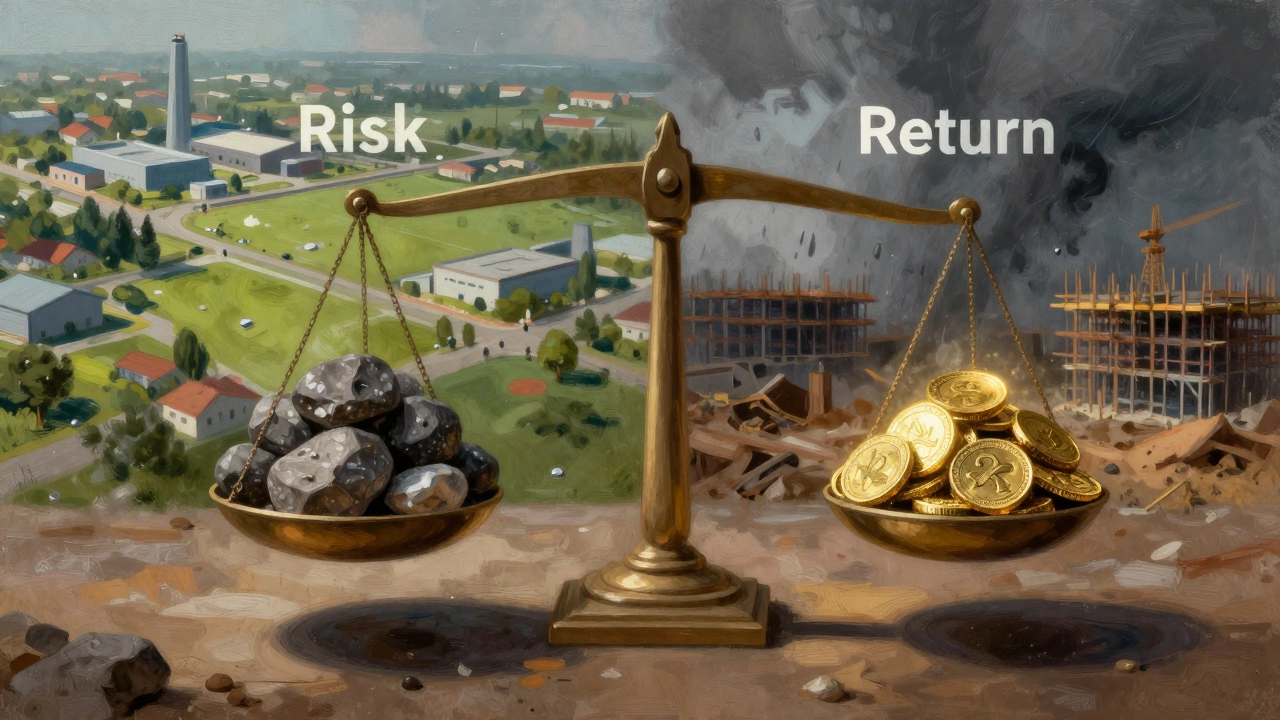
It is tempting to chase the highest possible Cash-on-Cash number. However, aggressive targets often hide red flags. Here is how to protect yourself.
Ignoring Vacancy Risks: Pro formas often assume 100% occupancy. Real life does not. If a major tenant leaves, your cash flow drops instantly. Ensure your return calculation includes a conservative vacancy assumption (at least 5-10%).
Underestimating CapEx: Reserve funds for roof replacements, HVAC systems, and parking lot repairs. If you do not set aside 5-10% of gross income for Capital Expenditures (CapEx), your reported Cash-on-Cash return is inflated. One major repair can wipe out three years of profits.
Tax Implications: Cash-on-Cash is a pre-tax metric. Depending on your jurisdiction, rental income may be taxed significantly. Consult a tax professional to understand your after-tax return, which is the number that truly matters for your net worth.
Strategies to Improve Your Cash-on-Cash Return
If a deal doesn't meet your target return initially, you might still salvage it through value-add strategies. These methods increase the numerator (cash flow) or decrease the denominator (cash invested).
- Renegotiate Financing: Shop around for lenders. A 0.5% reduction in interest rate can significantly boost annual cash flow. Consider interest-only periods if cash flow is tight initially.
- Reduce Operating Expenses: Audit utility bills, insurance premiums, and property management contracts. Switching to energy-efficient lighting or renegotiating service agreements can save thousands annually.
- Optimize Rents: Are current rents below market rate? Implementing modest increases upon lease renewal or re-leasing vacant units can immediately improve NOI.
- Add Amenities: For multifamily or office buildings, adding amenities like bike storage, EV chargers, or co-working spaces can justify higher rents and reduce turnover.
Conclusion: Defining Your Own Benchmark
A "good" Cash-on-Cash return is subjective. For a retiree seeking steady income, 6% might be perfect. For a young investor leveraging debt to build a portfolio, 10% might be the minimum threshold. The key is consistency in your analysis. Use the same metrics for every deal, adjust for local market conditions, and always prioritize cash flow sustainability over speculative appreciation. In commercial real estate, cash flow pays the bills; appreciation builds the legacy. Focus on the former first.
Is a 10% cash-on-cash return good?
Yes, a 10% cash-on-cash return is generally considered very good in 2026, especially for moderate-risk assets like industrial or suburban retail. It indicates strong cash flow relative to equity invested. However, ensure this return is sustainable and not reliant on unrealistic occupancy assumptions.
What is the difference between cash-on-cash return and ROI?
ROI (Return on Investment) is a broader term that can include appreciation, tax benefits, and principal paydown over multiple years. Cash-on-cash return is a specific annual metric focusing only on pre-tax cash flow generated relative to the initial cash invested. Cash-on-cash is simpler and more immediate for evaluating yearly performance.
How does leverage affect cash-on-cash return?
Leverage amplifies your cash-on-cash return if the property's cap rate is higher than your mortgage interest rate (positive leverage). If your interest rate is higher than the cap rate, leverage reduces your return (negative leverage). Proper financing is crucial to maximizing this metric.
Should I focus more on cap rate or cash-on-cash return?
Use cap rate to compare the intrinsic value of different properties in the same market. Use cash-on-cash return to evaluate how well a specific financing structure works for your personal finances. Both are essential, but cash-on-cash tells you what hits your bank account.
What is a safe cash-on-cash return for retirement income?
For retirement, many investors prefer lower-risk assets with consistent cash flow, targeting 6-8% cash-on-cash returns. These typically come from Class A multifamily or medical office buildings with long-term tenants. Stability and predictability are more important than maximum yield in this context.