Compact Living Suitability Calculator
Your Living Situation
Suitability Analysis
Adjust your preferences and click "Check Suitability" to see how well a 600 sq ft apartment fits your lifestyle.
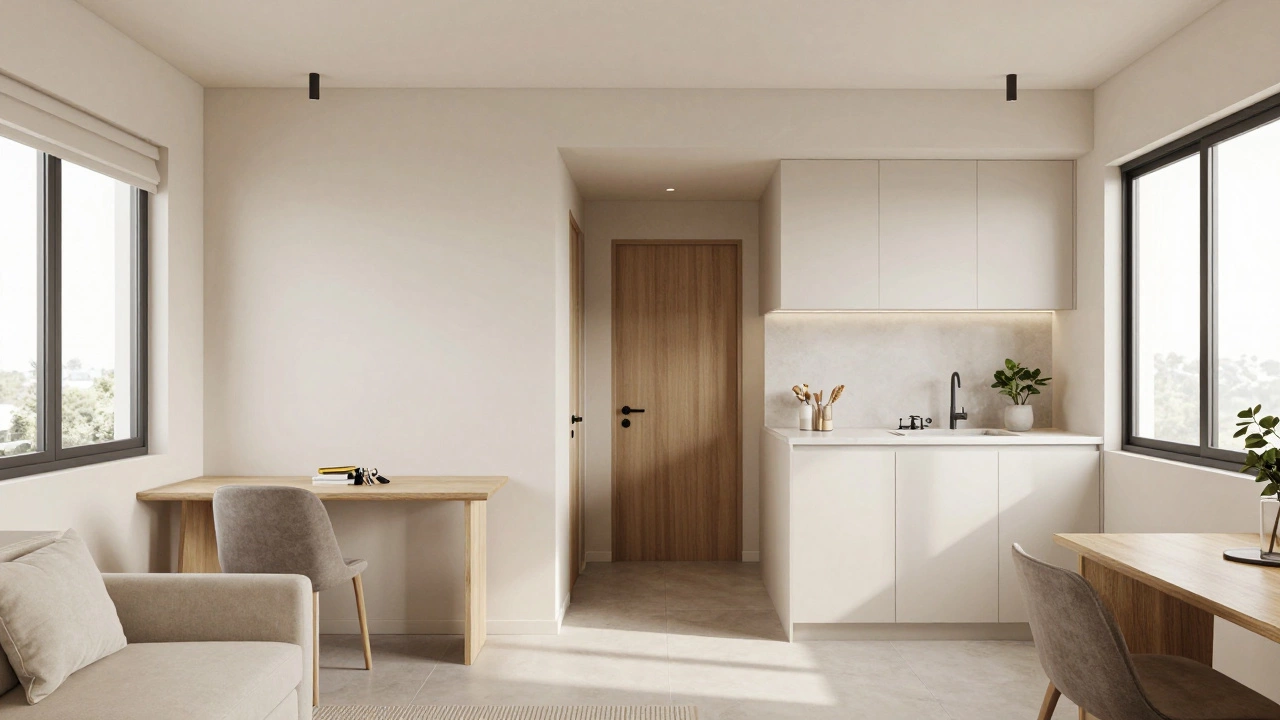
Imagine walking into a flat that feels like a cozy nook rather than a sprawling estate. You drop your keys on the entry table, turn around, and you’re already in the kitchen. It’s efficient, it’s manageable, but is it *too* small? This is the exact dilemma facing thousands of city dwellers today. When you see a listing for a 600 sq ft apartment, especially one marketed as a 2BHK (two bedrooms, hall, kitchen), your first reaction might be skepticism. Can two people really live comfortably in less than 56 square meters? The short answer is yes, but it requires a shift in mindset and a lot of clever planning.
In cities like London, Mumbai, or New York, square footage is a luxury we often have to negotiate away. A 600 sq ft unit isn’t just "small"; it’s a specific lifestyle choice. It forces you to prioritize experiences over possessions. But before you sign a lease or close on a mortgage, you need to understand what this space actually looks like in practice, how it compares to standard expectations, and whether it fits your daily life.
The Reality of Square Footage: What Does 600 Sq Ft Actually Look Like?
To grasp the scale, let’s strip away the real estate jargon. A 600 sq ft apartment is roughly the size of a standard tennis court’s service box or about four parking spaces laid out side-by-side. In metric terms, that’s approximately 55.7 square meters. For context, the average studio apartment in London is often between 300 and 400 sq ft. So, 600 sq ft gives you significantly more room-enough to separate sleeping areas from living areas.
However, the term "2BHK" attached to this size raises eyebrows. Traditionally, a 2BHK implies two distinct bedrooms, a living area, and a kitchen. Fitting all these functional zones into 600 sq ft means some compromises are inevitable. One bedroom will likely be a full-size room, while the second might be a smaller den, a walk-in closet converted into a workspace, or a room accessible only through the main bedroom (an en-suite layout). The "hall" or living area will be compact, serving double duty as a dining space.
Is 600 sq ft considered small for a family?
For a couple without children, 600 sq ft is manageable and common in urban centers. For a family with young children, it is quite tight. Each person would have roughly 150-200 sq ft of private space if shared equally, which can lead to feelings of confinement over time.
Why Are Developers Building Smaller Units?
You might wonder why such compact units are becoming so prevalent. It’s not just developers trying to squeeze more profit per acre. There’s a genuine demographic shift happening. Millennials and Gen Z buyers are delaying homeownership or choosing to stay in the city longer. They value location and amenities over sheer volume of space.
A 600 sq ft apartment in a prime central location often costs less than a larger unit in the suburbs. This allows buyers to access better schools, job hubs, and nightlife. Additionally, maintenance costs, council tax (in the UK), and utility bills are significantly lower. Heating a 600 sq ft space takes a fraction of the energy required for a 1,200 sq ft home. In an era of rising energy prices, this efficiency is a major selling point.
Furthermore, the rise of remote work has changed how we use space. We don’t need large formal living rooms for entertaining guests every weekend. Instead, we need functional zones: a quiet spot for video calls, a comfortable bed, and a clean kitchen. A well-designed 600 sq ft 2BHK can meet these needs perfectly.
Pros and Cons of Living in a Compact 2BHK
Living small isn’t for everyone. It demands discipline and organization. Before you commit, weigh these factors carefully.
| Feature | 600 Sq Ft (Compact) | 900+ Sq Ft (Standard) |
|---|---|---|
| Monthly Costs | Lower rent/mortgage, lower utilities | Higher fixed costs, higher energy bills |
| Cleaning Time | 30-45 minutes for a deep clean | 2-3 hours for a thorough clean |
| Storage | Limited; requires creative solutions | Ample closets and cabinets |
| Privacy | Low; noise travels easily | High; sound dampening is easier |
| Resale Value | High demand in city centers | Slower turnover in outer suburbs |
The biggest advantage is financial freedom. With lower housing costs, you can allocate more budget to travel, hobbies, or investments. The psychological benefit of having a clean, clutter-free home is also significant. When you have less space, you naturally buy less junk. Your environment stays tidy because there’s nowhere to hide mess.
On the flip side, privacy is the biggest challenge. If you share this space with a partner, arguments can feel louder when you’re only ten feet apart. Hosting dinner parties for more than four people becomes logistically difficult. You’ll find yourself eating at restaurants more often simply because your dining table seats two.

Design Hacks to Make 600 Sq Ft Feel Larger
If you decide to go ahead with a compact 2BHK, design is your best friend. You can’t change the square footage, but you can change the perception of space. Here are practical strategies used by interior designers in high-density cities.
- Use Light Colors: White, beige, and soft grays reflect light, making walls appear further away. Dark colors absorb light and make rooms feel cave-like. Stick to a monochromatic palette for walls and large furniture.
- Invest in Multi-Functional Furniture: A sofa bed is essential for guests. A dining table that folds down to a desk saves floor space. Ottomans with hidden storage keep blankets and books out of sight.
- Go Vertical: Floor-to-ceiling shelves draw the eye upward, emphasizing height rather than width. Hang art higher up on the wall. Use tall, narrow bookcases instead of wide, low ones.
- Mirrors are Magic: Place a large mirror opposite a window. It doubles the natural light and creates an illusion of depth. A mirrored cabinet door in the hallway can make a cramped entrance feel airy.
- Declutter Ruthlessly: Every item in a 600 sq ft apartment must earn its place. If you haven’t used it in six months, donate it. Clutter kills flow. Keep surfaces clear to maintain a sense of calm.
Consider open-plan layouts where possible. Removing non-load-bearing walls between the kitchen and living area can merge two small spaces into one medium-sized, versatile zone. Glass partitions can separate the bedroom from the living area without blocking light.
Who Should Consider a 600 Sq Ft Apartment?
This type of housing isn’t universal. It works best for specific demographics. Young professionals who spend most of their day at work or in co-working spaces will appreciate the low maintenance. Couples without children who value travel and socializing over home ownership status are ideal candidates. Empty nesters downsizing from larger family homes also find relief in the simplicity of a smaller footprint.
However, if you are a collector, an artist with large equipment, or someone who loves hosting large gatherings, a 600 sq ft apartment will likely cause frustration. Families with teenagers need privacy and personal space, which is hard to provide in such a compact layout. In these cases, look for slightly larger units, perhaps 800-900 sq ft, even if it means moving slightly further from the city center.

Financial Implications and Long-Term Value
From an investment perspective, small apartments in prime locations tend to hold their value well. They are always in demand by renters and first-time buyers. The entry price is lower, meaning a broader pool of potential purchasers. In markets like London, a 600 sq ft flat in Zone 1 or 2 might command a higher price per square foot than a larger house in Zone 4, due to the premium on convenience.
When calculating your budget, factor in the cost of furnishing. While the apartment is cheaper, high-quality, space-saving furniture can be expensive. Custom-built joinery to maximize storage adds to the initial cost but pays off in longevity and functionality. Don’t skimp on quality here; cheap particle board furniture will wear out quickly in a high-traffic small space.
Frequently Asked Questions
Can I fit a washing machine in a 600 sq ft apartment?
Yes, but it requires planning. Many modern kitchens have space under the counter for a slimline washer-dryer combo. Alternatively, if the building has communal laundry facilities, you can save valuable indoor space by skipping a dedicated machine.
Is it hard to sell a small apartment later?
Not necessarily. In urban areas, small apartments are highly liquid assets. They appeal to investors looking for rental yields and first-time buyers entering the market. Location matters more than size in dense cities.
How do I store clothes in a small 2BHK?
Maximize vertical space with floor-to-ceiling wardrobes. Use under-bed storage containers for seasonal items. Edit your wardrobe regularly; aim for a capsule collection of versatile pieces that mix and match easily.
Does a 600 sq ft apartment feel claustrophobic?
It depends on the layout and lighting. Open plans, high ceilings, and large windows prevent claustrophobia. Poorly designed units with dark corridors and small windows can feel cramped regardless of total square footage.
Are pets okay in small apartments?
Small dogs and cats thrive in apartments. Large, high-energy breeds may struggle without easy access to a park. Ensure the building allows pets and that there is green space nearby for daily exercise.