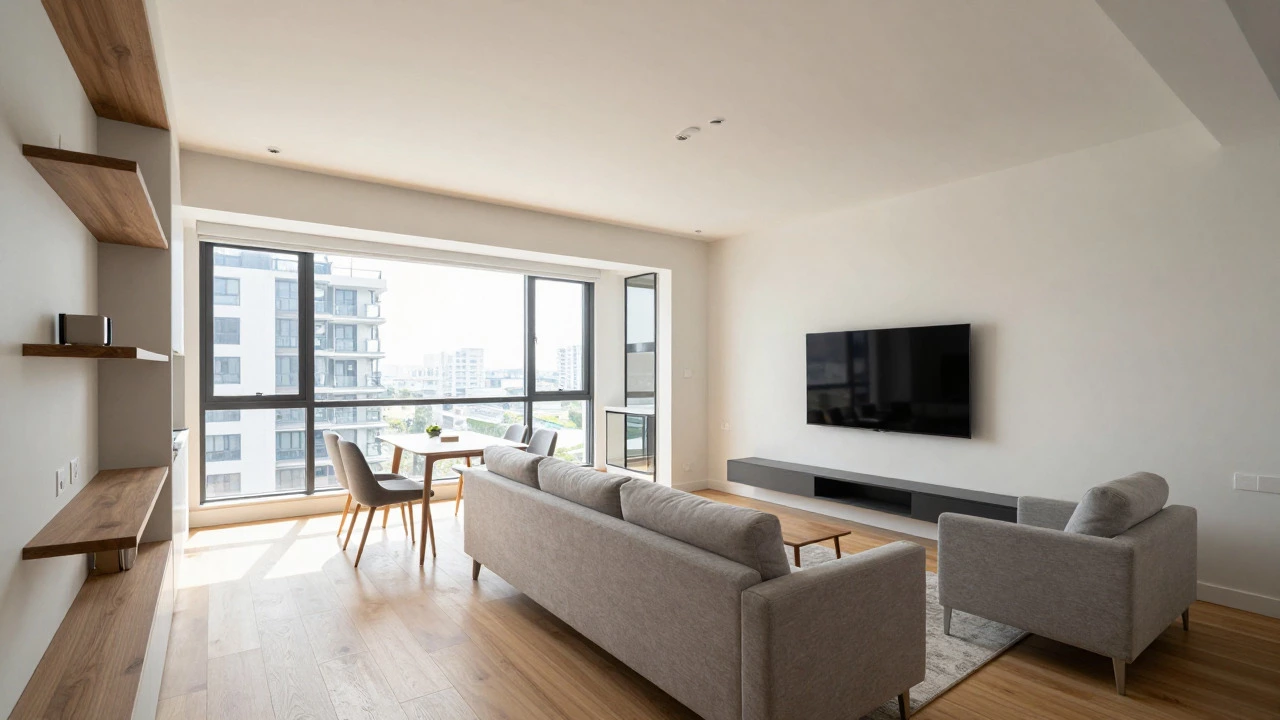
750 sq ft Apartment Fit Checker
Your Household Details
Fit Results
Walking into a 750 sq ft apartment is a residential unit of approximately 69.7 square meters, typically configured as a two-bedroom layout in many markets. The first thing you notice isn't the square footage on the brochure; it's how your shoulders feel against the hallway walls. Is it spacious or cramped? That depends entirely on where you are and what you're trying to fit inside those four walls.
In the UK, a 750 sq ft unit is considered quite generous for a one-bedroom flat but tight for a family home. However, in South Asian markets like India, this size is the standard benchmark for a compact 2BHK apartment (Two Bedroom, Hall, Kitchen). If you are looking at property listings in cities like Mumbai, Bangalore, or Hyderabad, 750 sq ft is the entry-level ticket for a dual-bedroom setup. But does "entry-level" mean "livable"? Let's break down the reality of living in this footprint.
The Geography of Space: Where Are You?
Square feet don't have a universal meaning. They change value based on local housing norms. To understand if 750 sq ft is "big," we need to look at the context of the location.
- United Kingdom: In London, the average new-build one-bedroom flat is around 550-600 sq ft. A 750 sq ft unit here would likely be a small two-bedder or a very large one-bed with an office nook. It feels open because UK apartments often feature higher ceilings and larger windows relative to floor area.
- India (Major Metro Cities): Here, 750 sq ft is the minimum viable size for a 2BHK. Developers optimize every inch. The living room might double as a dining area, and bedrooms are designed to hold a queen-size bed and a wardrobe with minimal walking space.
- USA (High-Density Urban Centers): In cities like New York or San Francisco, 750 sq ft is a comfortable one-bedroom or a micro two-bedroom. It offers more breathing room than the typical 450 sq ft studio found in these areas.
If you are buying in a market where 1,000 sq ft is considered "small," then 750 sq ft is definitely compact. If you are in a market where 600 sq ft is the norm for a couple, 750 sq ft feels surprisingly expansive.
Anatomy of a 750 Sq Ft 2BHK
How do developers actually fit two bedrooms, a living area, a kitchen, and bathrooms into 750 sq ft? It’s a puzzle of efficient design. Here is a realistic breakdown of how that space is usually allocated in a standard 2BHK layout:
| Room Type | Average Size (Sq Ft) | Function & Constraints |
|---|---|---|
| Master Bedroom | 120 - 130 | Fits queen bed, wardrobe, small dressing table. Limited space for a desk. |
| Second Bedroom | 100 - 110 | Often used as guest room or home office. Fits single/double bed and storage. |
| Living/Dining Area | 180 - 200 | Open-plan concept. Sofa, TV unit, and dining table for 4 must share this zone. |
| Kitchen | 80 - 90 | L-shaped or parallel layout. Counter space is prioritized over cabinet depth. |
| Bathrooms (x2) | 50 - 60 each | Compact showers instead of tubs. Toilet, sink, and shower in a tight triangle. |
| Hallways/Circulation | 60 - 70 | Wasted space. Narrow corridors connecting rooms. |
| Total Built-up | ~750 | Note: This excludes balconies which may add 50-100 sq ft. |
Notice the "Circulation" row. In small apartments, up to 10% of your paid-for space is just hallways. This is why floor plan shape matters more than total number. A long, narrow 750 sq ft unit feels much smaller than a square one because you lose more space to corridors.
Who Actually Lives Well in 750 Sq Ft?
Size is only half the story. Lifestyle determines if the space works. A 750 sq ft 2BHK is not a one-size-fits-all solution. It shines for specific demographics and fails for others.
The Ideal Fit:
- Couples without children: Two people can easily manage this space if they keep clutter low. The second bedroom becomes a dedicated home office or hobby room.
- Young professionals working from home: Having a separate room for work prevents the "living in the bedroom" syndrome common in studios.
- Minimalists: People who own less stuff, use multi-functional furniture, and prioritize experiences over possessions.
- Families with toddlers: Diaper changing tables, toy bins, and strollers eat up living room space quickly. The second bedroom becomes a nursery, leaving no guest room.
- Entertainers: Hosting more than 6-8 guests in a 180 sq ft living area gets awkward fast. Furniture placement becomes a logistical nightmare.
- Collectors/Hobbyists: If you have a large book collection, gym equipment, or musical instruments, 750 sq ft will feel suffocating within six months.
The key metric here is "personal space per person." If you divide 750 by the number of occupants, you get roughly 375 sq ft per person. Real estate experts suggest 300-400 sq ft per adult is the comfort threshold for urban living. So, mathematically, it works for two adults. Add a third permanent resident, and the ratio drops below comfort levels.
Design Hacks to Maximize 750 Sq Ft
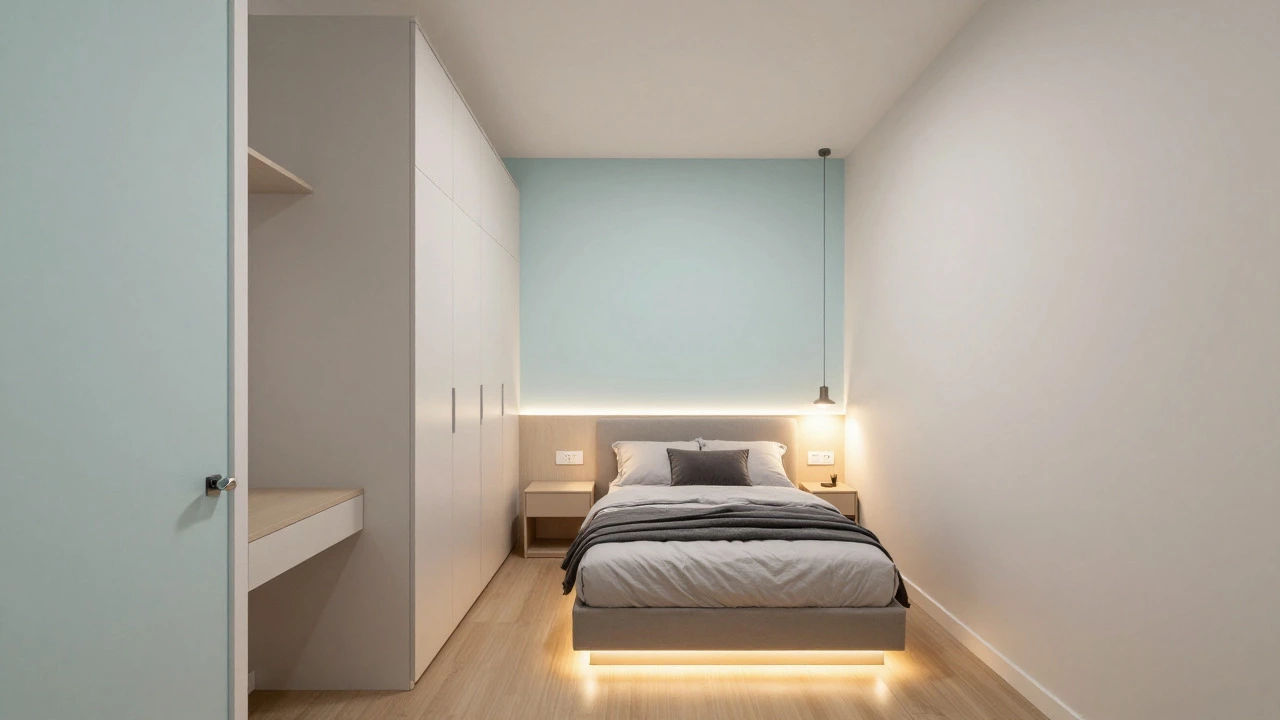
If you decide 750 sq ft is right for you, you need to treat the interior design as a strategic exercise, not just an aesthetic choice. Every inch must earn its place.
- Vertical Storage: Install shelves that go to the ceiling. In a 750 sq ft unit, wall space is your most valuable real estate. Use vertical lines to draw the eye up, making the room feel taller.
- Mirrors and Light Colors: Place a large mirror opposite the window. Paint walls in off-whites or light greys. Dark colors absorb light and make small spaces feel cave-like.
- Multi-Functional Furniture: A sofa bed is non-negotiable for the second bedroom if you want flexibility. Ottomans with hidden storage replace bulky coffee tables.
- Open Plan Layouts: Avoid solid walls between the kitchen and living area. Glass partitions or open shelving maintain visual flow, making the 750 sq ft feel like one continuous 750 sq ft rather than three tiny boxes.
- Declutter Ruthlessly: Apply the "one in, one out" rule. If you buy a new jacket, donate an old one. Small spaces amplify clutter visually.
Cost vs. Comfort: The Financial Angle
Why do people choose 750 sq ft when 900 or 1,000 sq ft options exist? Usually, it’s the price tag. In high-demand urban centers, the difference between a 750 sq ft and a 900 sq ft unit can be $50,000 to $100,000 (or equivalent local currency).
Consider the maintenance costs too. Heating, cooling, and cleaning a smaller footprint is cheaper. Energy bills drop significantly because there is less air volume to condition. For renters, a 750 sq ft apartment often comes with lower utility pass-throughs compared to larger units.
However, resale value is a factor. Smaller units tend to have a broader buyer pool because they are more affordable for first-time buyers. This liquidity can protect your investment better than a niche, oversized unit that only appeals to a few wealthy families.
Common Mistakes When Buying Small
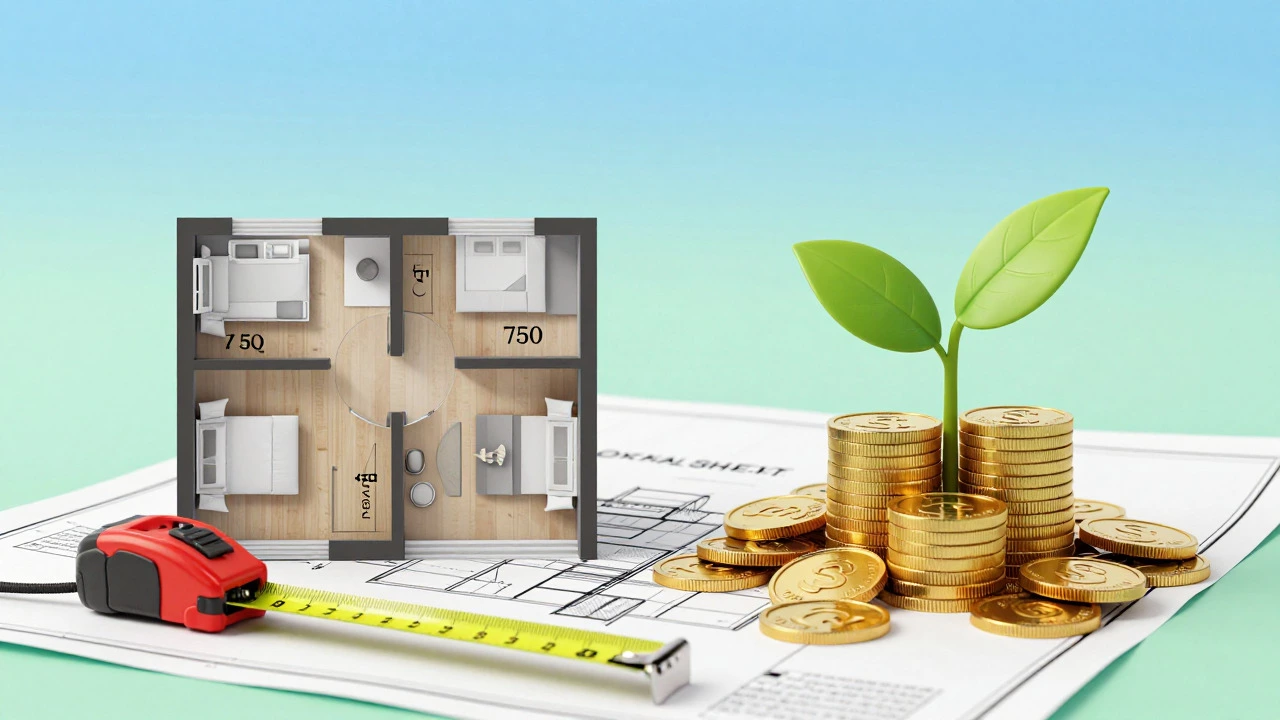
Many buyers fall into traps when viewing 750 sq ft properties. Here are the red flags to watch for:
- Ignooring Ceiling Height: A 750 sq ft unit with 8-foot ceilings feels airy. The same footprint with 7-foot ceilings feels claustrophobic. Always measure height.
- Window Placement: Windows should be on exterior walls. If the kitchen or bathroom has no direct ventilation, humidity issues will arise in small, enclosed spaces.
- Storage Deficit: Count the closets. If there are only two small wardrobes for a 2BHK, you will need to buy expensive custom cabinetry later, eroding your savings.
- No Balcony: In hot climates, a balcony is crucial for airflow and drying laundry. Without it, indoor humidity rises, damaging furniture and health.
Verdict: Is It Big Enough?
So, is 750 sq ft big for an apartment? It is big enough for two adults who live lightly. It is too small for a growing family or anyone who hoards possessions. It is a compromise between cost and comfort. If you value location and low maintenance over sprawling square footage, it’s a smart, practical choice. If you need a spare room for aging parents or frequent guests, look for at least 900 sq ft.
The bottom line: Don't judge the apartment by the number alone. Judge it by your life. Bring a tape measure, visualize your furniture, and walk through the space during different times of day to see how the light changes. If it feels like a home, not a box, then 750 sq ft is exactly the right size.
Can you fit a full-sized refrigerator in a 750 sq ft kitchen?
Yes, but you need to check the door swing. Standard full-size refrigerators are about 30 inches wide. In a compact L-shaped kitchen, ensure there is at least 36 inches of clearance in front of the fridge for easy access. Built-in models save counter space but require precise installation.
What is the ideal ceiling height for a small apartment?
9 feet is ideal. It creates a sense of volume and allows for tall storage units. 8 feet is acceptable but standard. Below 8 feet, the space starts to feel oppressive, especially in bedrooms where headroom matters for sleep quality.
How much does a 750 sq ft apartment cost to clean monthly?
Is 750 sq ft enough for a home office?
Yes, if you convert the second bedroom. A 100 sq ft room fits a standing desk, ergonomic chair, and a monitor arm. Ensure good internet connectivity and natural light to prevent fatigue during long work sessions.
Do small apartments have poor resale value?
Not necessarily. Small units in prime locations often appreciate well because they attract first-time buyers and investors. However, they may take longer to sell than larger family homes due to a narrower demographic appeal.