Virginia Housing Affordability Calculator
Calculate if you can afford housing in different Virginia regions based on your income and the 30% affordability rule.
Select a Region
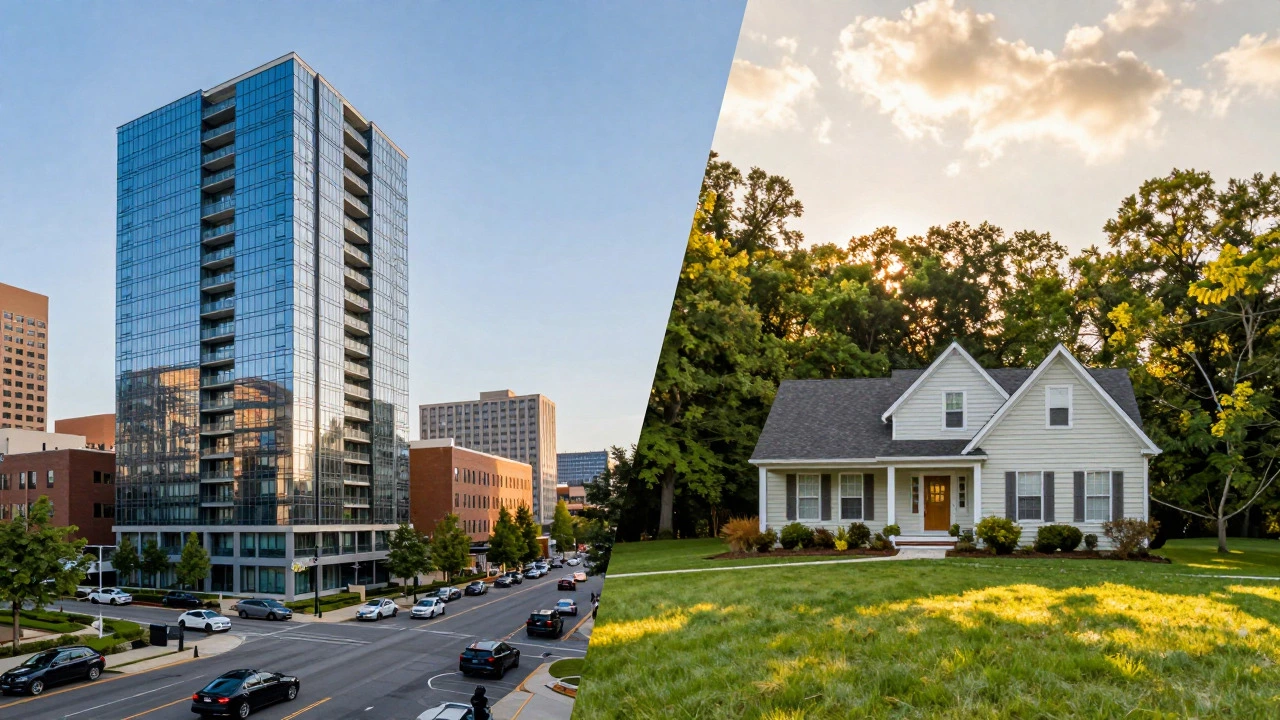
--Can you actually find a place to live in Virginia without spending half your paycheck on rent? The short answer is: it depends entirely on where you look and how much you earn. If you are looking at Northern Virginia, the situation is grim. But if you head south toward the Shenandoah Valley or the Eastern Shore, the picture changes dramatically.
Virginia is not a monolith. It is a state with extreme economic disparities packed into relatively small geographic distances. One county might have a median home price of $750,000, while the neighboring county sits at $300,000. Understanding this divide is the first step in navigating the housing market here. You cannot treat "Virginia" as a single market; you have to treat it as several distinct markets operating under one state government.
The Geography of Affordability
To understand whether Virginia has affordable housing, you first need to define what "affordable" means in local terms. The Department of Housing and Urban Development (HUD) defines affordability as spending no more than 30% of your gross income on housing. In many parts of Virginia, hitting that target feels like winning the lottery.
Northern Virginia, which includes Arlington, Fairfax, Loudoun, and Prince William counties, is one of the most expensive regions in the United States. This area serves as the primary bedroom community for Washington, D.C., and hosts major tech hubs like Tysons Corner. Here, the median rent for a two-bedroom apartment often exceeds $2,200 per month. For a household earning the federal poverty line, finding an available unit that fits the 30% rule is statistically nearly impossible without subsidies.
Move slightly further out to Richmond, the state capital, and the numbers start to shift. While prices have risen sharply since 2020, Richmond remains one of the few major cities in the region where middle-income earners can still buy a modest home or rent a decent apartment without being completely priced out. The median home price hovers around $350,000, which is high compared to the national average but manageable for dual-income households.
Then there is Southern Virginia. Cities like Lynchburg, Danville, and Petersburg offer some of the lowest costs of living in the state. In these areas, you can often find rental properties for under $1,000 per month and homes for sale below $200,000. However, affordability here comes with trade-offs. Job markets are thinner, wages are lower, and public transportation options are limited compared to the north. You save on housing, but you may earn less overall.
| Region | Median Home Price | Median Rent (2-Bed) | Affordability Rating |
|---|---|---|---|
| Northern VA (NoVA) | $650,000+ | $2,200+ | Very Low |
| Richmond Metro | $350,000 | $1,400 | Moderate |
| Hampton Roads | $320,000 | $1,350 | Moderate |
| Southern VA | $190,000 | $950 | High |
Government Programs and Subsidies
If your income falls below certain thresholds, Virginia does have mechanisms to help. The primary tool is Housing Choice Vouchers, commonly known as Section 8. This federal program provides direct assistance to low-income families, the elderly, and persons with disabilities. With a voucher, you pay roughly 30% of your adjusted income toward rent, and the government pays the landlord the difference.
However, the demand vastly outstrips the supply. In Northern Virginia, waitlists for Section 8 vouchers can be closed for years. When they do open, thousands of applicants compete for a handful of spots. In rural areas, the waitlists might be shorter, but the inventory of landlords willing to accept vouchers is smaller. Landlords often prefer private tenants because the paperwork and inspection requirements for subsidized housing can be burdensome.
Beyond Section 8, the Virginia Housing Development Authority (VHDA) plays a crucial role. VHDA offers down payment assistance programs for first-time homebuyers. These programs can cover up to 5% of the purchase price for eligible buyers who secure a mortgage through approved lenders. This is particularly useful in mid-priced markets like Richmond or Hampton Roads, where closing costs and down payments are the biggest barriers to entry.
Local governments also chip in. The City of Alexandria, for example, has its own Community Development Block Grant (CDBG) programs that provide rental assistance and homeownership grants. Similarly, Norfolk and Portsmouth have initiatives aimed at preserving existing affordable stock from being converted into luxury condos. If you are struggling financially, checking with your local Department of Social Services is essential-they often know about emergency rental assistance funds that fly under the radar.

The Impact of New Construction and Zoning
A common argument among urban planners is that the solution to unaffordable housing is to build more housing. Virginia has seen a surge in new construction, particularly in Northern Virginia and around Richmond. Developers are building thousands of new units, but here is the catch: most of them are market-rate apartments targeting upper-middle-class professionals.
True affordable housing-units restricted to those earning 60% or less of the Area Median Income (AMI)-requires incentives. Many Virginia jurisdictions use inclusionary zoning laws, which require developers to set aside a percentage of new units as affordable or pay a fee in lieu of doing so. While this helps, it rarely creates enough volume to solve the crisis. The fees collected are often used to fund larger affordable housing projects, but those projects take years to plan and build.
Zoning restrictions remain a significant hurdle. Large parts of Virginia, especially suburban areas, are zoned exclusively for single-family homes with large lot sizes. This prevents the construction of duplexes, triplexes, or small apartment buildings that could serve moderate-income renters. Recent legislative efforts at the state level aim to encourage denser development near transit hubs, but change is slow. Until zoning laws adapt, the supply of naturally occurring affordable housing will remain constrained.
Hidden Costs and Financial Traps
When evaluating affordability, do not just look at the monthly rent or mortgage payment. Virginia has some of the highest property tax rates in the country. In Northern Virginia, effective property tax rates can exceed 1.0%, meaning a $500,000 home could cost $5,000 annually in taxes alone. This adds hundreds of dollars to your monthly housing cost, pushing many owners closer to the brink of financial stress.
Insurance is another factor. Parts of Virginia, particularly the coastal regions like Hampton Roads and the Eastern Shore, are increasingly prone to flooding and severe storms. Homeowners insurance premiums have skyrocketed in these areas. Some insurers are even pulling out of high-risk zones, forcing residents into the state-backed Citizens Property Insurance Corporation, which is often more expensive and harder to qualify for.
For renters, utility costs can vary wildly. Older buildings in cities like Richmond and Norfolk may lack efficient heating and cooling systems, leading to exorbitant energy bills in the summer and winter. Always ask potential landlords about average utility costs before signing a lease. A cheap rent check can become expensive fast if your electric bill doubles every July.
Strategies for Finding Affordable Housing
If you are currently searching for housing in Virginia, here are practical steps to improve your chances:
- Expand Your Geographic Search: Do not limit yourself to the city center. Look at adjacent counties. For example, instead of Arlington, consider Fauquier County. Instead of Richmond, look at Chesterfield or Hanover. Commute times may increase, but housing costs can drop significantly.
- Consider House Hacking: Buying a multi-unit property (duplex or triplex) allows you to live in one unit and rent out the others. The rental income can offset your mortgage, making homeownership more affordable. This strategy works well in growing suburbs like Fredericksburg or Harrisonburg.
- Apply for Multiple Programs: Do not rely on just one source of aid. Apply for Section 8, check VHDA for homeownership assistance, and register with local nonprofit housing agencies. Each organization has its own waitlist and eligibility criteria.
- Look for "Naturally Occurring" Affordable Housing: These are older, non-subsidized apartments that charge below-market rents simply because they haven't been renovated. They are common in inner-ring suburbs and older downtown districts. While they may lack modern amenities, they provide a critical entry point for low-income renters.
- Network Locally: Many affordable rentals are never listed online. Talk to neighbors, join local Facebook community groups, and put up flyers in laundromats and grocery stores. Word-of-mouth referrals can lead to hidden opportunities.
The Future Outlook
Will Virginia become more affordable in the coming years? The trend lines suggest otherwise. Population growth continues to drive demand, particularly in the northern part of the state. Meanwhile, construction costs remain high due to inflation and labor shortages. Without significant policy shifts-such as massive increases in public funding for affordable housing or sweeping zoning reforms-the gap between income and housing costs will likely widen.
That said, remote work has introduced a new dynamic. More people are able to live in cheaper parts of the state while working for companies based in expensive hubs. This influx of remote workers is driving up prices in previously affordable areas like Charlottesville and Winchester. If you are moving to Virginia for a job, negotiate a location-based salary adjustment. If you are already here, leverage your flexibility to move to a lower-cost area without sacrificing income.
Virginia has affordable housing, but it is fragmented, competitive, and often requires proactive effort to access. Success depends on understanding the regional differences, utilizing all available government resources, and being willing to compromise on location or amenities. It is not impossible, but it is certainly not easy.
What is the income limit for affordable housing in Virginia?
Income limits vary by county and household size. Generally, "low income" is defined as earning 80% or less of the Area Median Income (AMI), while "very low income" is 50% or less. For a family of four in Northern Virginia, very low income might cap at around $60,000-$70,000 annually, whereas in Southern Virginia, it could be closer to $40,000. Check HUD's annual income limits for your specific county.
How long is the waitlist for Section 8 in Virginia?
Waitlists vary drastically. In Northern Virginia, waitlists are often closed for several years at a time. When they reopen, the wait can be 3-5 years. In rural counties, the wait might be shorter, sometimes less than a year, but availability of participating landlords is also lower.
Are there first-time homebuyer programs in Virginia?
Yes. The Virginia Housing Development Authority (VHDA) offers down payment assistance grants and loans. Additionally, Fannie Mae and Freddie Mac have programs tailored for first-time buyers. Localities like Alexandria and Fairfax County also have their own grant programs for eligible purchasers.
Which cities in Virginia are the cheapest to live in?
Cities in Southern Virginia such as Danville, Martinsville, and Emporia generally have the lowest cost of living. Other affordable options include Bristol, Wytheville, and parts of the Shenandoah Valley. These areas offer lower rent and home prices but fewer high-paying job opportunities.
Does Virginia have rent control?
No. Virginia state law prohibits local governments from implementing rent control measures. This means landlords can raise rents to market rate upon lease renewal, provided they give proper notice. Tenants have limited protection against sudden spikes, though some localities have enacted right-to-counsel laws for eviction cases.