Apartment Size Finder for Singles
Answer a few questions about your daily routine and preferences to find the most suitable apartment layout for your solo life.
Awaiting Your Input
Fill out the form to get personalized recommendations.
Studio Apartment
This option minimizes cleaning and rent while maximizing efficiency for minimalists.
Why this fits you:
You’re moving in alone. Maybe it’s your first time living solo, maybe you’re downsizing after a breakup or divorce, or maybe you’ve just decided that sharing a bathroom with three strangers is no longer an option. Suddenly, the question hits hard: what is the best apartment size for one person?
It’s not just about square footage. It’s about how much cleaning you can tolerate, whether you need a dedicated home office, and if you plan on hosting friends often enough to justify the extra rent. In London, where space costs a premium, getting this wrong can mean paying £300 more a month for a room you use as a laundry basket storage unit.
| Apartment Type | Average Size (sq ft) | Best For | Monthly Cost Impact (London Avg) |
|---|---|---|---|
| Studio | 350-450 | Minimalists, students, short-term stays | Lowest |
| 1BHK | 500-650 | Professionals, WFH employees, privacy seekers | Moderate |
| 2BHK | 700-900 | Hobbyists, hosts, future-proofing for partners/kids | High |
The Case for the Studio: Minimalism or Claustrophobia?
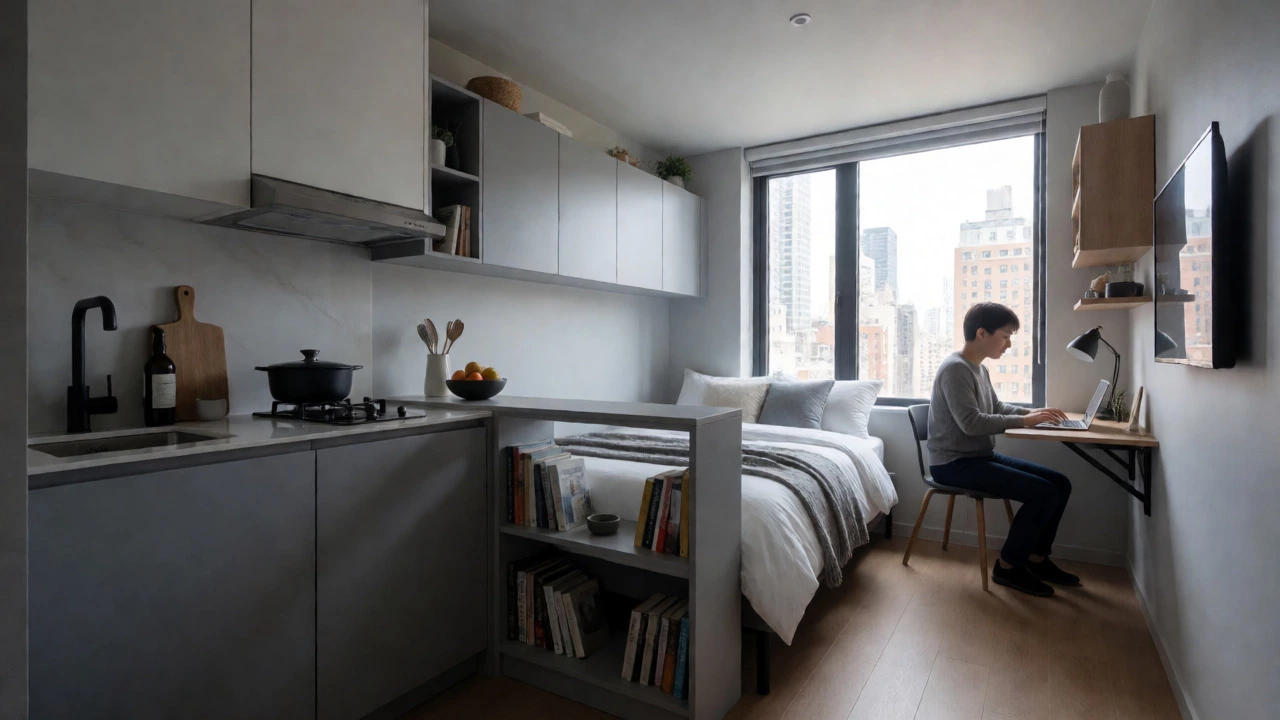
A studio apartment is a self-contained housing unit that combines living, sleeping, and cooking areas into one open-plan room. For many singles, this is the entry point. It’s cheap, efficient, and forces you to declutter. If you spend 10 hours a day at work and only come home to sleep, a studio makes financial sense.
But here’s the catch: boundaries. When your bed is three feet from your stove, cooking smells linger on your sheets. Working from home becomes a nightmare because there’s no door to close. I’ve seen friends try to make studios work by using bookshelves as dividers, but it rarely feels like true separation. Unless you have a strict minimalist lifestyle or a very small budget, a studio often leads to "cabin fever" within six months.
Why 1BHK is the Sweet Spot for Most Singles
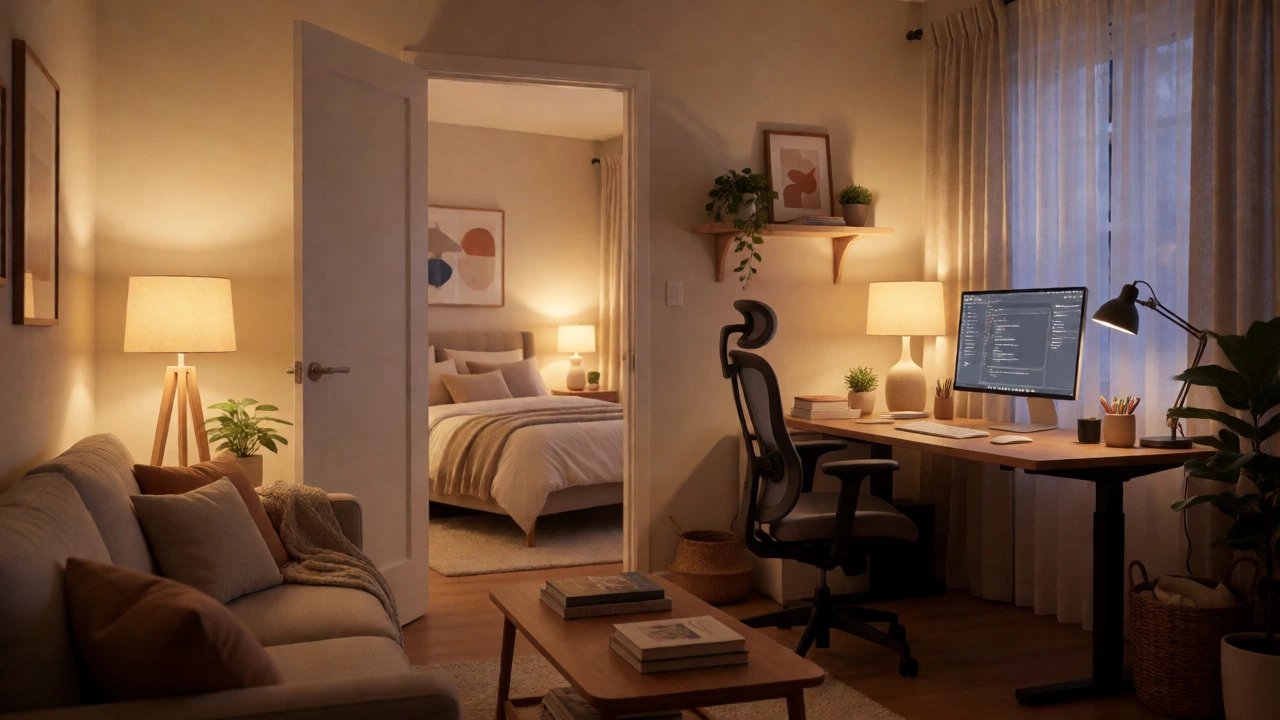
If you ask me what the practical answer is, it’s usually the 1BHK (One Bedroom, Hall, Kitchen), which provides distinct private and public spaces while maintaining affordability. This layout separates your rest area from your social/work area. You can cook dinner without worrying about grease settling on your pillow. You can take a Zoom call in the living room while your roommate (if you have one) or your partner sleeps undisturbed.
In terms of utility, a 1BHK allows for better zoning. You can dedicate the bedroom strictly to sleep and relaxation, which psychologically helps with insomnia and stress. The living area becomes a place for hobbies-reading, gaming, or working out. For most professionals in their late 20s to 30s, the slight price increase over a studio is worth the mental clarity and functional separation.
When Does a 2BHK Make Sense for One Person?
This is where things get interesting. Why would one person pay for two bedrooms? In cities like London or New York, this seems extravagant, but there are specific scenarios where a 2BHK apartment offers superior value through flexible space utilization.
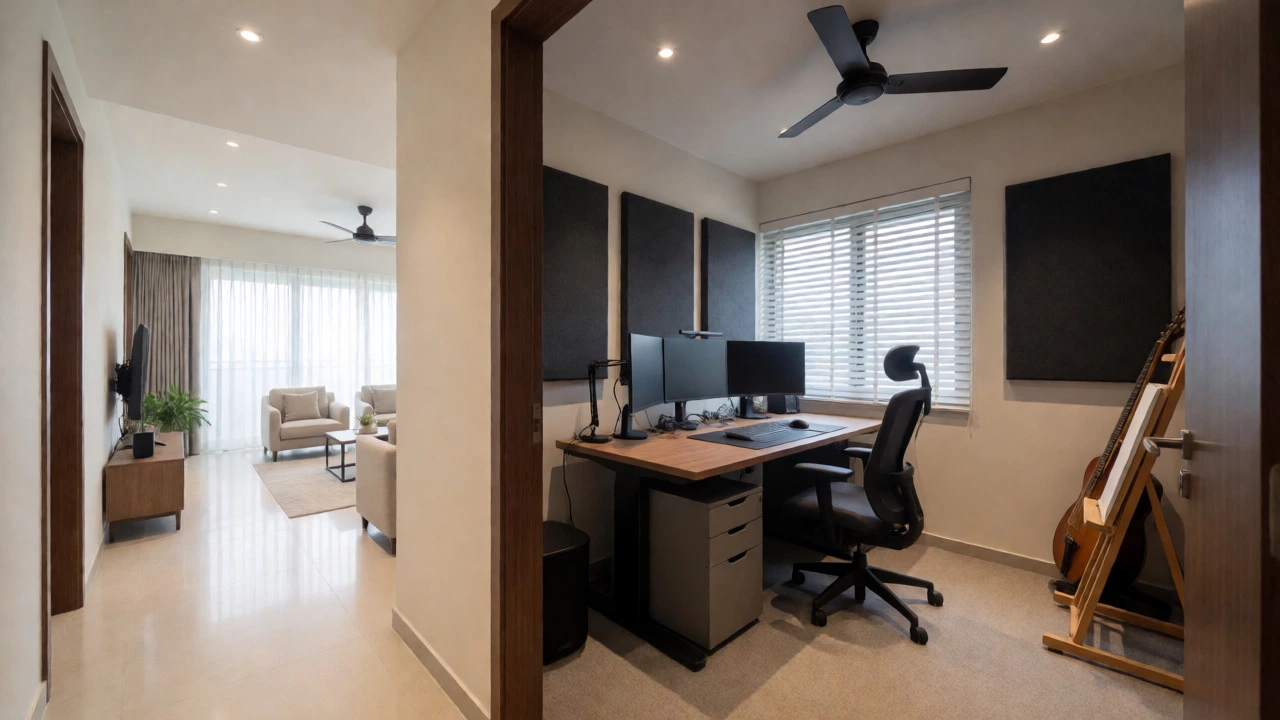
- The Home Office Necessity: If you work remotely full-time, converting the second bedroom into a dedicated office is a game-changer. No more setting up and packing away your laptop every night. You get a real desk, ergonomic chair, and soundproofing.
- The Hobby Room: Musicians need space for instruments. Artists need easels. Collectors need display cases. A 2BHK lets you keep your hobby separate from your living space.
- Hosting Frequency: Do you have family visiting monthly? Or friends who crash on weekends? A guest room saves you from buying an expensive sofa bed and keeps your main living area clutter-free.
- Future-Proofing: Planning to move in with a partner soon? Or expecting a child? Renting a 2BHK now avoids the hassle of moving again in a year.
However, be careful. If you buy a 2BHK just because it looks spacious in photos, you might end up with a cold, empty second room that collects dust. Only choose this if you have a concrete plan for that second room.
Calculating Your Actual Space Needs
Don’t just guess. Look at your current belongings. Measure your largest furniture pieces. Do you own a king-size bed? That takes up roughly 42 square feet. Add wardrobes, a dresser, and bedside tables, and you’re already at 80-100 square feet just for the bedroom. Now look at your living room. Do you have a large sectional sofa? A TV stand? A dining table?
Use this simple rule of thumb: Add 20% buffer to your calculated minimum. If your furniture measures 400 sq ft, aim for at least 480 sq ft of usable floor space. Remember, walls, doors, and hallways eat into your total square footage. A "500 sq ft" listing might only offer 420 sq ft of usable space once you account for structural elements.
Budget vs. Lifestyle Trade-offs
Let’s talk money. In London, the difference between a decent 1BHK and a 2BHK can range from £200 to £500 per month. Over a year, that’s £2,400 to £6,000. Is the extra space worth that cost?
Calculate your "cost per hour of use." If you use the second bedroom 2 hours a week for yoga, that’s 104 hours a year. If the extra rent is £3,000, you’re paying £28 per hour for yoga space. Compare that to a local gym membership (£15/month). Suddenly, the math changes. But if you use that room for a home office 40 hours a week, the value proposition flips completely.
Also, consider utilities. Larger apartments cost more to heat, especially in older British buildings with poor insulation. Check the Energy Performance Certificate (EPC) rating. A B-rated 1BHK might actually be cheaper to run than a D-rated 2BHK, even if the rent is lower.
Practical Tips for Choosing Your Size
Before signing a lease, do these three things:
- Visit at Different Times: See the apartment during the day and at night. Lighting affects perceived space. Also, check noise levels when neighbors are active.
- Bring a Tape Measure: Don’t rely on agent claims. Measure the closet depth. Can it fit hangers sideways? Measure the window sills. Can they hold plants?
- Test the Flow: Walk through the space as if you were moving in. Can you carry a suitcase from the front door to the bedroom without bumping into walls? Is the kitchen workflow logical (fridge → sink → stove)?
Remember, the "best" size isn’t universal. It’s personal. Start with your daily routine, add a safety margin for guests or hobbies, and then check your bank account. The right apartment supports your life, not the other way around.
Is a studio apartment too small for long-term living?
For most people, yes, beyond 1-2 years. Studios lack acoustic and visual separation, leading to psychological fatigue. However, minimalists who spend little time at home may find them sustainable indefinitely.
What is the ideal square footage for a single professional?
A 1BHK between 500 and 650 square feet is generally considered ideal. It provides enough space for a separate workspace and living area without becoming unmanageable to clean or too expensive to maintain.
Should I rent a 2BHK if I live alone?
Only if you have a specific use case for the second room, such as a home office, hobby studio, or frequent hosting needs. Otherwise, you are likely paying for unused space.
How does apartment size affect heating costs?
Larger apartments require more energy to heat. In poorly insulated buildings, a 2BHK can cost 30-50% more in winter bills compared to a studio. Always check the EPC rating before committing.
Can I convert a studio into a pseudo-1BHK?
Yes, using room dividers, heavy curtains, or tall bookshelves. While it doesn't provide true soundproofing, it creates visual zones that help mentally separate sleeping from living areas.