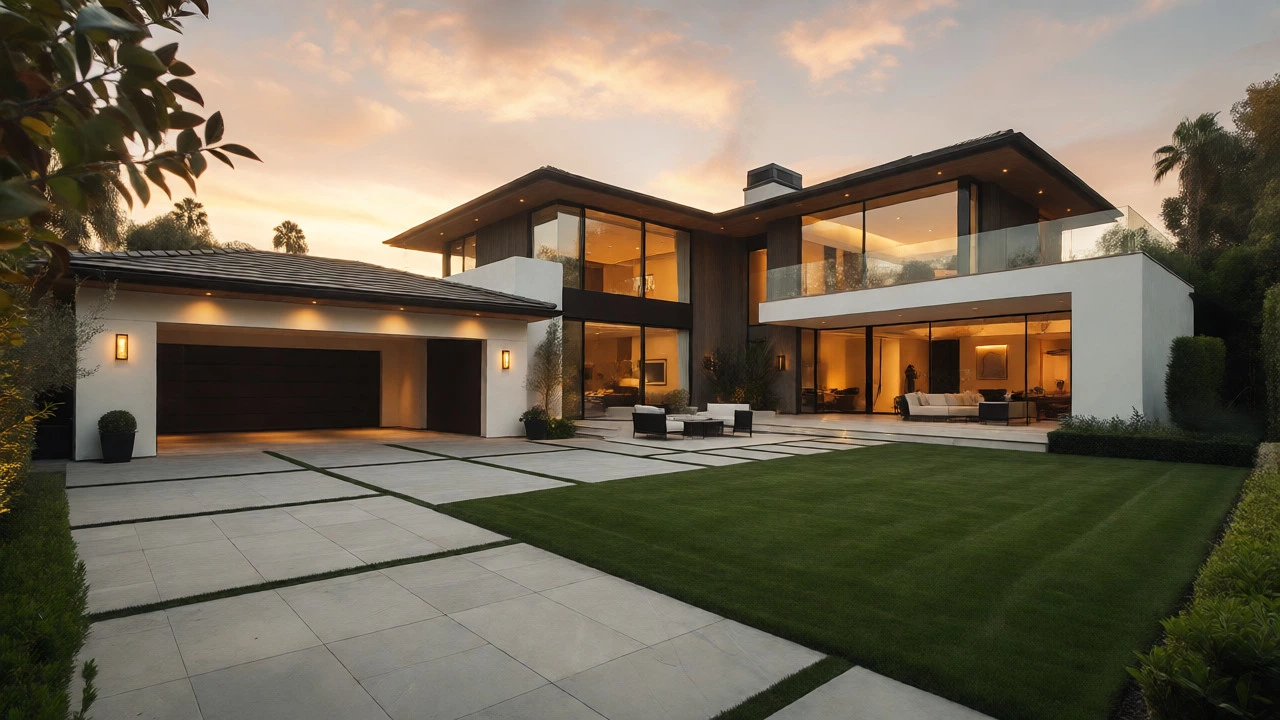
Villa Value & Size Estimator
Don't just buy the label. Analyze the actual living space versus the marketing hype.
Property Details
Enter details to see valuation metrics.
Valuation Report
You walk into a listing that calls itself a "grand villa," but the floor plan looks more like a spacious townhouse. Or maybe you see a modest two-story home marketed as an "exclusive villa retreat." The term "villa" has become so diluted in modern real estate marketing that it often means nothing specific regarding actual dimensions. If you are shopping for a luxury home, understanding the true average size of a villa is critical to avoid overpaying for a label rather than square footage.
There is no single global standard for what constitutes a villa. In Tuscany, a villa might be a historic farmhouse with 2,000 square feet of living space surrounded by vineyards. In Dubai, a villa is often a sprawling, gated mansion exceeding 10,000 square feet. However, when we strip away the regional branding and look at market data from major luxury hubs, clear patterns emerge. This guide breaks down the realistic dimensions you should expect, how to calculate value per square foot accurately, and why the distinction between built-up area and plot size matters more than the marketing brochure suggests.
Defining the Modern Villa vs. Standard House
Before diving into numbers, we need to agree on what we are measuring. A Villa is a detached residential structure typically characterized by its size, privacy, and often luxurious amenities or grounds. Unlike a semi-detached house or a terraced row home, a villa stands alone. It usually features multiple floors, distinct zoning for living and sleeping areas, and private outdoor space.
In the United States and United Kingdom, the line between a "large detached house" and a "villa" is blurry. In Southern Europe and Latin America, the definition is stricter, often tied to historical architecture or specific zoning laws. For this analysis, we focus on properties explicitly marketed as villas in high-value markets like London, Los Angeles, Miami, and Bali. These are not starter homes; they are lifestyle assets.
The key differentiator isn't just size-it's autonomy. A villa typically includes private parking (often a garage), a dedicated entrance, and self-contained utilities. While a large suburban house might share a driveway, a villa owns its perimeter. This autonomy drives up the land cost, which directly impacts the price-to-size ratio.
Global Average Sizes by Region
If you are looking for a universal number, you won't find one. But if you break it down by region, the averages tell a compelling story about local wealth density and land availability.
| Region | Avg. Built-Up Area (Sq Ft) | Avg. Plot Size (Sq Ft) | Typical Bedrooms |
|---|---|---|---|
| North America (US) | 3,500 - 4,500 | 10,000+ | 4-5 |
| United Kingdom | 2,800 - 3,800 | 5,000 - 8,000 | 4-6 |
| Mediterranean (Spain/Italy) | 2,000 - 3,000 | Variable (Land-heavy) | 3-5 |
| Middle East (Dubai/Saudi) | 6,000 - 12,000+ | 15,000+ | 5-7+ |
| SE Asia (Bali/Thailand) | 1,500 - 2,500 | Open-air focused | 3-4 |
Notice the disparity. In the US, particularly in places like California or Florida, a "villa" is essentially a large McMansion or a custom estate. The average hovers around 4,000 square feet. This sounds massive until you compare it to Dubai, where the culture of grandeur pushes averages well above 8,000 square feet. Conversely, in parts of Italy or Spain, a villa might have less interior square footage but sits on acres of olive groves. The value there is in the land and heritage, not just the drywall.
In the UK, the term is often reserved for high-end suburban properties or converted country estates. Here, the average is closer to 3,200 square feet. Why lower? Land scarcity. British plots are smaller, so builders maximize verticality rather than sprawl. If you are buying in London, don't expect the sprawling single-story layouts common in Arizona.
Built-Up Area vs. Total Plot Size: The Hidden Metric
This is where most buyers get burned. Agents love to quote "total area," which can include gardens, patios, pools, and driveways. But you live in the built-up area, not the grass.
Built-Up Area refers to the enclosed, habitable floor space within the walls of the building. This is what your mortgage lender cares about and what your heating bill reflects. When calculating the average size of a villa, always ask for the Net Internal Area (NIA) or Gross Internal Area (GIA). Do not accept "plot size" as a proxy for living space.
Consider a typical scenario in a tropical market like Bali. A listing might claim a "500 sqm villa." Upon inspection, you realize 300 sqm is open-air pavilion and garden, and only 200 sqm is enclosed bedroom and bathroom space. That’s a tiny home by Western standards. In contrast, a European villa listing might show 200 sqm of built area but sit on a 2-acre lot. The price difference between these two will be astronomical despite similar "total" figures.
Pro Tip: Always request a floor plan with measurements. If the agent refuses to provide specific room dimensions, they are likely hiding inefficient layouts-long hallways, oversized foyers, or dead corners that inflate the total square footage without adding livable comfort.

How Room Count Influences Perceived Size
Square footage doesn't tell the whole story. Layout efficiency matters. A 3,000-square-foot villa with five small bedrooms feels cramped compared to a 3,000-square-foot villa with three master suites and huge open-plan living areas.
Modern villa trends favor "open concept" designs. This reduces wall thickness and hallway waste, making the same square footage feel larger. However, older villas, especially those built before 2010, often suffer from compartmentalization. You might find a 4,000-square-foot home that feels like 2,500 because of redundant corridors and formal dining rooms nobody uses.
When evaluating size, count the "functional zones." A true villa should have:
- A primary suite wing (bedroom, dressing area, ensuite bath).
- Secondary guest wings (often separate for privacy).
- A communal living zone (kitchen, dining, lounge).
- Service areas (laundry, staff quarters, storage).
If a property lacks distinct service areas, it’s not really a villa-it’s just a big house. True villas accommodate help or guests without disrupting the main household flow. This spatial separation requires extra square footage, usually 10-15% more than a standard detached home of equivalent bedroom count.
The Impact of Outdoor Living Spaces
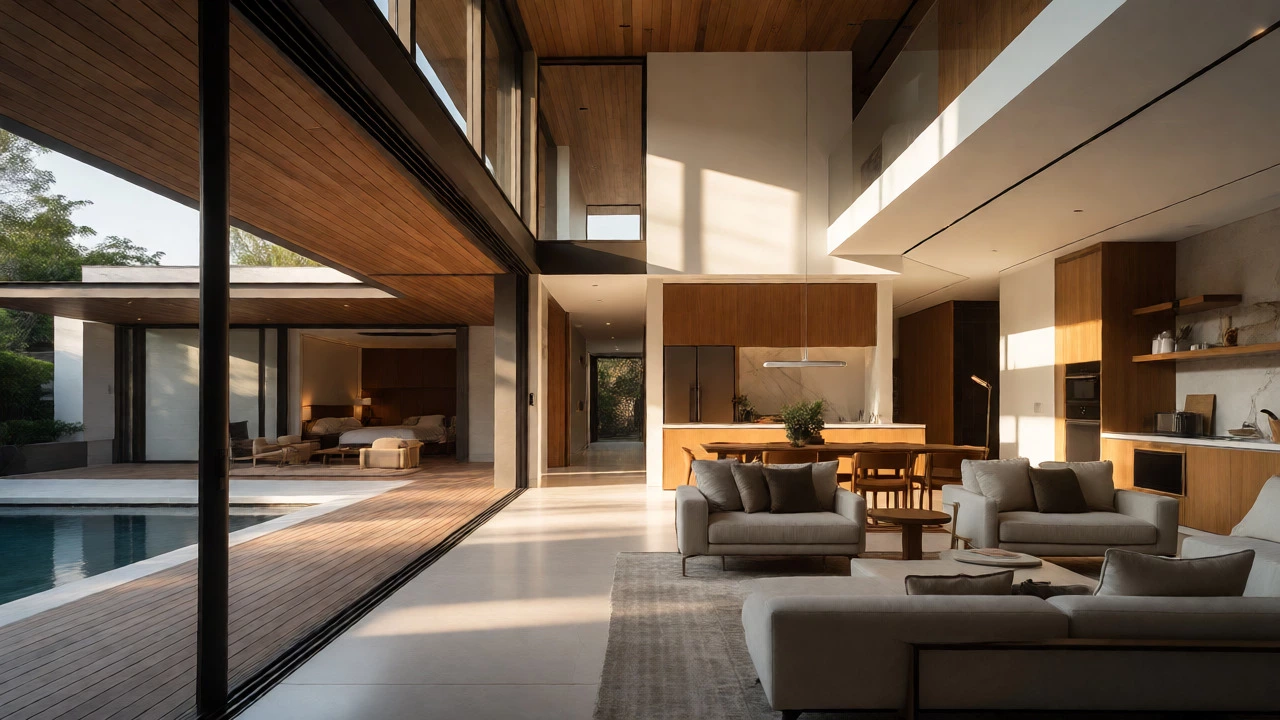
In many climates, the "size" of a villa extends beyond the roofline. In Australia, California, and Southern Europe, covered verandas, loggias, and lanais are considered integral to the living space. They function as outdoor rooms.
Should you count these in your average size calculation? Yes, but separately. Create two metrics:
- Cooling/Heating Load Area: Only enclosed, climate-controlled space.
- Lifestyle Area: Enclosed space plus covered, usable outdoor space.
For resale value, Lifestyle Area commands a premium. Buyers pay more for a seamless indoor-outdoor flow. However, for maintenance costs, it’s a liability. More glass and open structures mean higher energy bills and more frequent repairs. A smart buyer calculates the "maintenance burden per square foot." A 5,000-square-foot villa with 2,000 square feet of pool deck and pergola will cost significantly more to maintain than a compact 3,000-square-foot brick villa.
Calculating Value: Price Per Square Foot Pitfalls
You’ve found a villa. It’s 4,000 square feet. It costs $2 million. That’s $500 per square foot. Is that good?
Not necessarily. Comparing price per square foot across different types of villas is flawed if you ignore quality and location adjustments. A 4,000-square-foot villa in a remote countryside setting might have a lower price per square foot than a 2,500-square-foot urban villa, but the latter offers proximity to jobs and schools.
Use the "Comparable Sales" method instead. Look for other villas sold in the last six months within a half-mile radius. Adjust for:
- Age: New builds command a 10-20% premium over 10-year-old equivalents.
- Condition: Renovated interiors add significant value per square foot.
- Views: Ocean or mountain views can double the price per square foot regardless of size.
If your target villa is priced significantly below the neighborhood average per square foot, investigate why. Often, it’s due to poor layout, structural issues, or lack of permitted extensions. Cheap square footage is rarely a bargain if it requires a $200,000 renovation to make it livable.
Future-Proofing Your Purchase
The average size of a villa is trending upward in emerging markets but stabilizing in mature ones. Why? Environmental regulations and rising construction costs. Builders are optimizing space rather than expanding footprint.
When choosing your villa size, consider your long-term needs. Will you use all those bedrooms? Empty rooms collect dust and drain HVAC systems. Many buyers now prefer "right-sized" villas-3,000 to 4,000 square feet-that prioritize quality finishes over sheer volume. This approach aligns with the growing demand for sustainable luxury.
Also, check local zoning laws regarding expansion. Can you build an ADU (Accessory Dwelling Unit) on the plot later? A smaller villa on a large plot offers flexibility. A massive villa on a tiny plot locks you in forever. Flexibility is a hidden form of value.
Frequently Asked Questions
Is a villa always bigger than a regular house?
Not always. While villas are generally larger and more luxurious, some modern compact villas are designed with efficient, small footprints (under 2,000 sq ft) but high-end finishes and private amenities. The defining feature of a villa is its detachment and privacy, not strictly its square footage.
What is the minimum size required to call a property a villa?
There is no legal minimum in most countries. However, market convention suggests a property should offer at least 2,500 square feet of living space and significant private outdoor area to be credibly marketed as a villa in Western markets. In some regions, historical status allows smaller properties to retain the title.
Does a swimming pool count toward the villa's square footage?
No, swimming pools are part of the plot size or amenity package, not the built-up living area. They do not increase the taxable living square footage used for mortgage valuations, though they significantly impact the overall market value of the property.
Why are villas in Dubai so much larger than in Europe?
Land availability and cultural preferences drive this difference. Dubai has vast tracts of developable land and a culture that values expansive hospitality spaces. Europe faces strict zoning, historic preservation laws, and higher population density, limiting the physical footprint of new constructions.
How does the age of a villa affect its effective size?
Older villas often have thicker walls, higher ceilings, and more decorative moldings, which can reduce usable net space compared to modern builds. Additionally, outdated layouts may include wasted space like large formal dining rooms or long corridors, making the effective living area smaller than the gross square footage suggests.