Michigan Mortgage Calculator
Calculate Your Monthly Payment
See how Michigan's current market conditions affect your mortgage affordability. Based on the article's data showing median prices around $248,000 and rates above 6%.
Enter your details above to see your monthly mortgage payment.
Michigan home prices aren’t crashing, but they’re not soaring like they did in 2021 and 2022 either. If you’re wondering whether now’s the time to buy, sell, or just hold off, the answer isn’t simple - but it’s not mysterious either. The data tells a clear story: prices have softened, inventory is slowly rising, and buyers are regaining some leverage. This isn’t a collapse. It’s a correction.
What’s really happening with Michigan home prices?
According to the Michigan Association of Realtors, the statewide median home price in December 2025 was $248,000. That’s down about 5.2% from the peak of $261,500 in early 2023. It’s not a dramatic drop, but it’s consistent. In places like Detroit, Grand Rapids, and Lansing, prices have fallen between 4% and 7% from their highs. In suburban areas like Ann Arbor and Traverse City, prices are holding steady or dropping just 1-2%.
What’s driving this? Two big factors: mortgage rates and inventory. Rates stayed above 6% for over two years, and that’s had a real effect. A $250,000 home at 6.5% interest costs $1,580 a month in principal and interest. At 4%, it’s $1,190. That $390 difference is more than many people can absorb - so they wait, or they look elsewhere.
At the same time, more homes are coming onto the market. In 2023, Michigan had about 28,000 homes for sale in January. In January 2026, that number jumped to 41,000. That’s a 46% increase. More supply means less pressure on prices. Sellers who priced too high in 2023 are now dropping their asking prices - sometimes by $10,000 to $20,000 - just to get attention.
Where are prices falling the most?
Not everywhere. The biggest drops are in areas that saw the biggest spikes. Flint and Saginaw, for example, saw median prices climb 22% and 25% during the pandemic boom. Now, they’re falling back toward pre-pandemic levels. In Flint, the median price is now $89,000 - down from $112,000 in 2022. In Saginaw, it’s $118,000, down from $137,000.
Meanwhile, in Ann Arbor, prices are barely budging. The median home is still $410,000, just 1.5% below its 2023 high. Why? Because demand hasn’t cooled. The University of Michigan, major employers like Google and Ford’s tech hubs, and a steady stream of out-of-state buyers keep the market tight. Same in Grand Rapids: with over 10,000 new jobs added since 2021, the housing shortage hasn’t fully resolved.
So the story isn’t statewide - it’s local. If you’re in a city with strong job growth or good schools, prices are stable. If you’re in a town that relied on pandemic-driven migration, prices are adjusting.
Are homes selling slower?
Yes. In 2022, homes in Michigan sold in an average of 18 days. By late 2025, that number had stretched to 52 days. That’s not a disaster - it’s normal. It means buyers have time to shop, compare, and negotiate. Sellers who expect a bidding war are getting disappointed. One Lansing homeowner listed her 3-bedroom house in October 2025 for $285,000. After 60 days with no offers, she dropped it to $265,000. Two weeks later, she had two offers - one at $262,000.
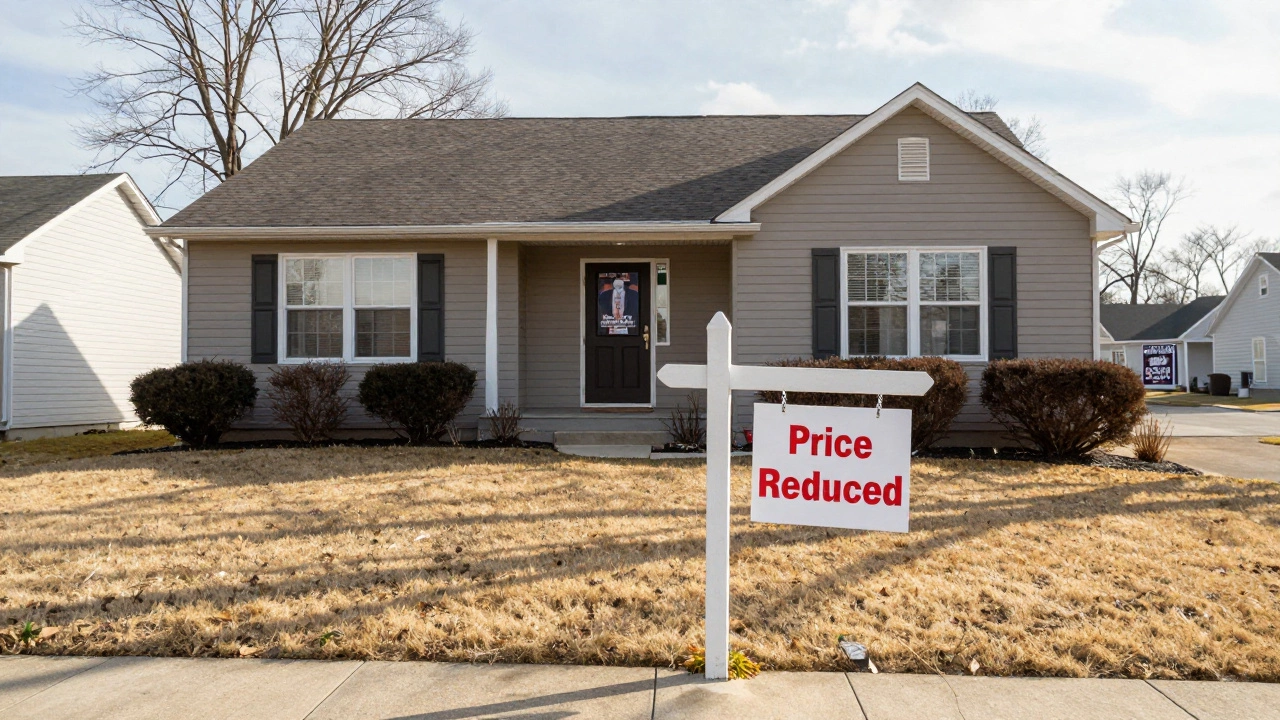
That’s the new reality: negotiation is back. Buyers are asking for repairs, credits, or closing cost help. Sellers who refuse to budge are seeing their listings sit. In 2025, 34% of Michigan listings had price reductions - up from 18% in 2022.
Is now a good time to buy?
If you’re ready to settle in and can handle a 6%+ mortgage rate, yes. You’re not going to get a fire sale, but you’re getting more choice and more room to negotiate. First-time buyers are seeing their best opportunity since 2019. In Kalamazoo, a buyer who put in an offer in December 2025 got a $15,000 credit toward closing costs - something unheard of in 2023.
Here’s what works now: get pre-approved, know your budget, and be ready to walk away. Don’t fall in love with one house. Look at 8-10. Most sellers are no longer holding out for the highest bid - they just want to move. That gives you power.
Also, don’t ignore fixer-uppers. In places like Pontiac and Muskegon, homes priced under $150,000 are still selling quickly - but only if they’re priced right. A $120,000 home with a new roof and updated kitchen can attract multiple offers. A $140,000 home with peeling paint and an old furnace? It’ll sit.
What about sellers?
If you’re thinking of selling, don’t panic. You’re not losing money unless you bought in 2021 or 2022 and are comparing to those peaks. Most Michigan homeowners still have 30-50% more equity than they did before the pandemic. You’re not underwater. You’re just not getting a windfall anymore.
What helps sellers now? Staging, photos, and pricing honestly. A home that’s clean, well-lit, and priced within 5% of comparable sales gets attention. One Grand Rapids seller hired a professional stager for $800. Her home sold in 21 days - 30 days faster than her neighbor’s house, which was listed “as-is.”
Don’t over-improve. Adding a pool or redoing the entire kitchen won’t pay off. Focus on curb appeal, functional updates, and clear pricing. Buyers today want transparency, not surprises.

What’s next for Michigan’s housing market?
Most economists expect Michigan home prices to stay flat or rise slowly through 2026. If mortgage rates drop below 5.5% - which some predict by late 2026 - demand could pick up again. But don’t expect a return to 2021 levels. The market has changed.
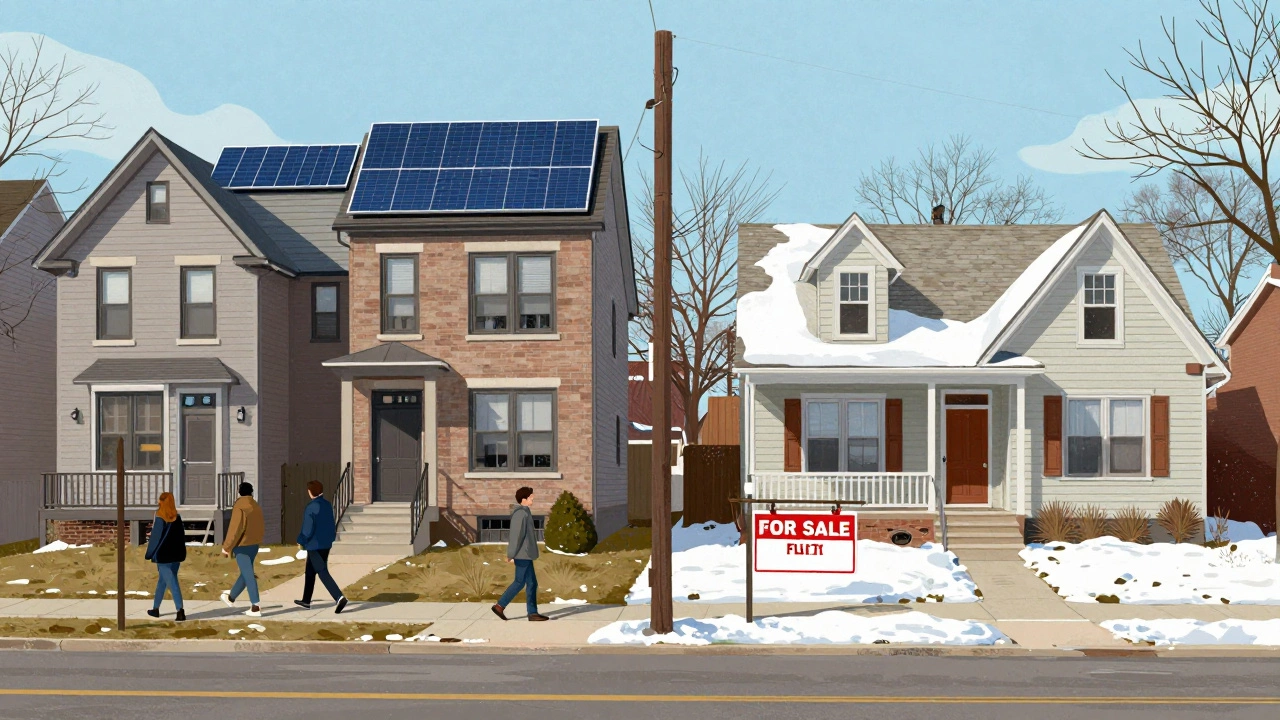
Demographics are shifting too. More millennials are buying homes, but they’re not chasing big yards. They want walkable neighborhoods, good internet, and energy efficiency. Homes built after 2010 with solar panels, smart thermostats, and updated insulation are selling faster and for higher prices - even in smaller towns.
And there’s another quiet trend: out-of-state buyers are still coming, but they’re more selective. People from Illinois, Ohio, and even Florida are moving to Michigan for lower taxes and cost of living - but they’re not paying premium prices for outdated homes. They want value.
Bottom line: Prices are adjusting, not collapsing
Michigan home prices are dropping in some places, holding steady in others, and rising slightly in a few. There’s no single answer. But if you’re looking to buy, you have more options than you did two years ago. If you’re selling, you need to be realistic - not greedy.
The market isn’t broken. It’s rebalancing. And for the first time in years, buyers have a real shot.
Are Michigan home prices dropping in 2026?
Yes, in many areas - but not everywhere. The statewide median price is down about 5% from its 2023 peak, with the biggest drops in cities like Flint, Saginaw, and Battle Creek. In places like Ann Arbor and Grand Rapids, prices are holding steady due to strong job growth and limited inventory.
Is now a good time to buy a home in Michigan?
If you’re ready to settle in and can afford a mortgage above 6%, then yes. You have more choices, longer listing times, and sellers are more willing to negotiate. First-time buyers are seeing their best opportunity since 2019. Look at multiple homes, get pre-approved, and be ready to walk away if the deal doesn’t make sense.
Why are Michigan home prices falling?
Two main reasons: higher mortgage rates and more homes on the market. Rates above 6% have cooled demand, while inventory has jumped 46% since 2023. Sellers who priced too high in 2022-2023 are now lowering prices to attract buyers.
Should I sell my home in Michigan now?
If you need to move, yes - but price it right. You’re not losing money unless you’re comparing to 2022 peaks. Most Michigan homeowners still have strong equity. To sell quickly, stage your home, take professional photos, and price within 5% of recent comparable sales. Overpricing will only delay the sale.
Which Michigan cities have the most affordable homes right now?
Flint ($89,000 median), Saginaw ($118,000), and Battle Creek ($132,000) have the lowest prices. These areas saw the biggest price surges during the pandemic and are now correcting. Homes in these cities often need updates, but they’re great for buyers who want affordability and are willing to do minor renovations.